Account Login
Don't have an account? Create One
By Alec Bruce
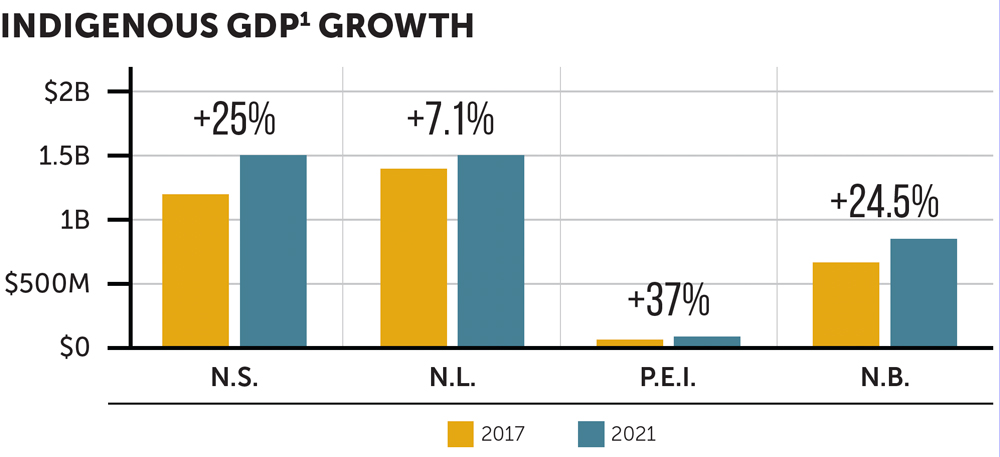
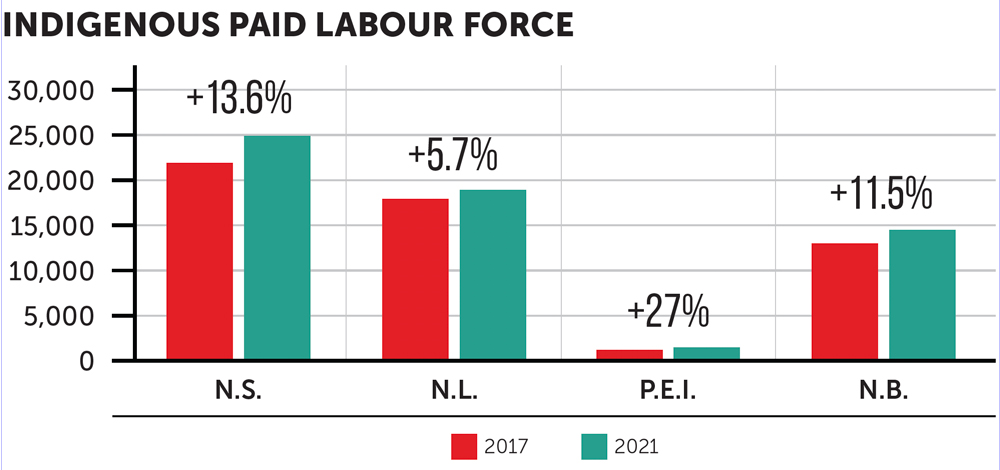
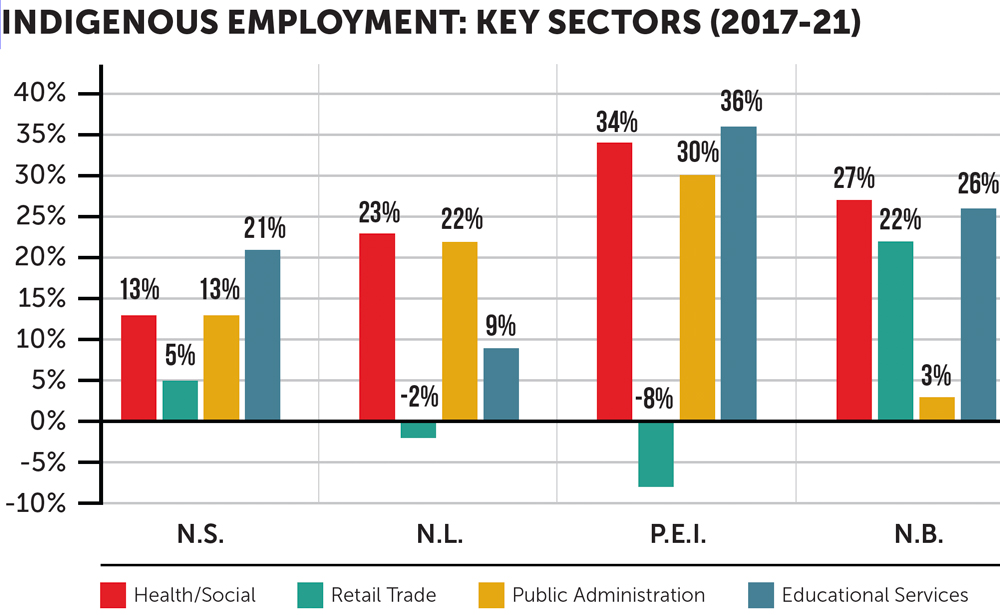
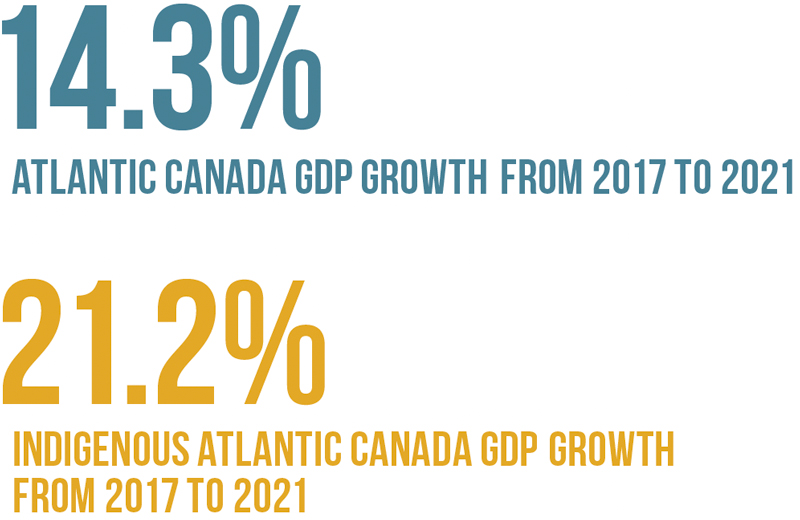
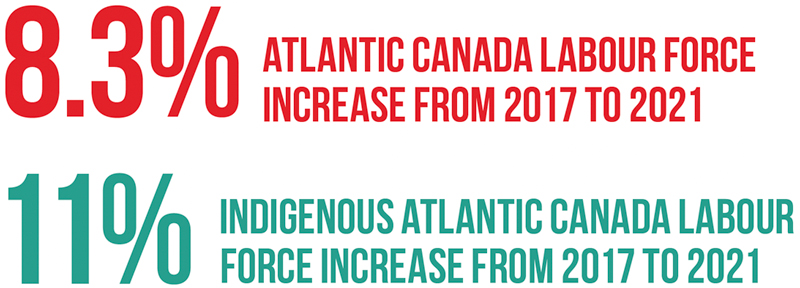
From the 2023 North American Indigenous Games to the acquisition of an interest in Clearwater Foods, Indigenous organizations, businesses and industries are making steady headway in Atlantic Canada, providing a growing number of good long-term jobs in a diversifying field of high-value sectors. Over the five-year period 2017-21 (the most recent Statistics Canada data available), Indigenous GDP and employment gains kept pace and, in many cases, outpaced the economy in general.
Nitassinan – The ancestral homeland of the Innu, an Indigenous people of Eastern Quebec and Labrador. It means “our land” in the Innu language
1GDP (Gross Domestic Product) here measures compensation of employees plus gross operating surplus plus gross mixed incomes plus taxes less subsidies on production. Source: Statistics Canada, Census of Population, 2021; Statistics Canada, “Indigenous Peoples Economic Account, 2012 to 2021”, April 2024; Atlantic Economic Council, “Economic and Fiscal Impacts of Indigenous Communities and Businesses in Atlantic Canada”, July 2024)
By Sal Sawler
For many, January is a time of blank slates and second shots. Depending on our circumstances, we may look at the year ahead with hope or trepidation, excitement or anxiety. This year, it feels like we’re in the early stages of something much bigger.
In 2016, Klaus Schwab, founder and executive chairman of the World Economic Forum (WEF), asserted that the fourth industrial revolution has begun, driven by technology that blurs physical, digital and biological lines. He also emphasized the need to “shape a future that works for all by putting people first, empowering them and constantly reminding ourselves that all of these new technologies are first and foremost tools made by people for people.”
Let’s see how that’s playing out across Atlantic Canada.
BioTraceIT
Product: PainTrace, a small, non-invasive device using sensors to detect and monitor pain levels in animals, with potential for human use. How does it help? Our animal companions can’t tell us when they’re in pain, but this tech can. Understanding pain levels makes it easier to accurately diagnose and treat our furry friends. Location: Charlottetown, P.E.I.
Audyse Technology
Product: AudyseCORE, an active noise-filtering device that can be added onto any motorcycle communication unit with a 3.5mm earbud jack. How does it help? Between the motor and the wind, motorcyclists face a higher-than-average risk of hearing loss. This tech uses AI to filter out harmful road noise while still permitting sirens and horns. Location: St. John’s, N.L.
UNB Engineering students Julia MacPherson, Leah Morrison, Robyn Meredith and Sarah Boyd
Product: A Force Myography Wearable Device (a wearable cuff with sensors) that allows people to control machines using simple gestures. How does it help? Since this tech could be used to control everything from wheelchairs to computer cursors, the potential for improved accessibility is truly exciting. Location: Fredericton, N.B.
Olyup
Product: Olyup, an “AI sports performance assistant” built on OpenAI’s GPT models, helps athletes track performance, identify strengths and areas for growth, and more. How does it help? This tech improves athletic performance by tracking progress and generating useful, data-based insights. Olyup is intended to supplement, but not replace, the work of a human coach. Location: Antigonish, N.S.
Dal’s Software Maintenance and Analytics Research Team
Research: This team, led by Dr. Tushar Sharma, is exploring ways to clean AI source code and reduce the staggering levels of energy powering the world’s data centres. How does it help? According to Forbes, our AI data centres alone are generating as much CO2 as Brazil. This research isn’t just helpful—it’s absolutely critical. Location: Halifax , N.S.
Stash Energy
Product: Stash Energy Heat Pump with thermal energy storage capabilities. How does it help? This heat pump saves money and energy by drawing and storing energy during off-peak times. When rates peak, that stored energy is available for use. Location: Fredericton, N.B.
Comment policy
Comments are moderated to ensure thoughtful and respectful conversations. First and last names will appear with each submission; anonymous comments and pseudonyms will not be permitted.
By submitting a comment, you accept that Atlantic Business Magazine has the right to reproduce and publish that comment in whole or in part, in any manner it chooses. Publication of a comment does not constitute endorsement of that comment. We reserve the right to close comments at any time.
Cancel