Account Login
Don't have an account? Create One
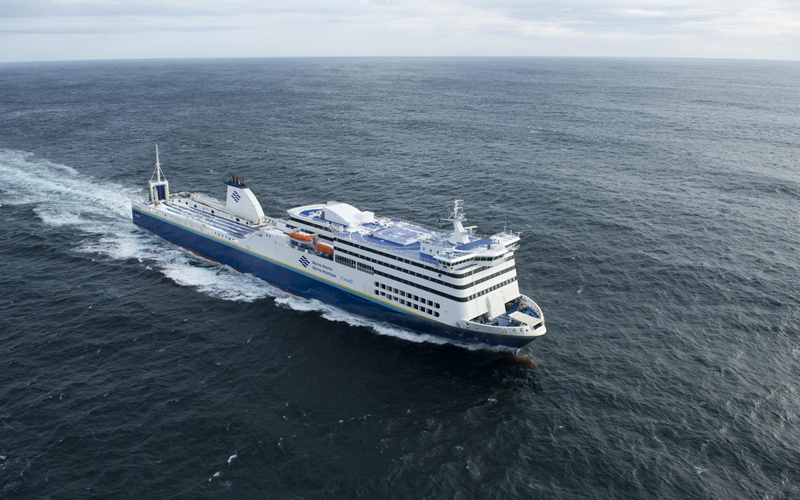
It was a good news announcement for Atlantic Canada on July 28 when Prime Minister Mark Carney announced cuts to bridge tolls and ferry fares in Atlantic Canada. The announcement was generally hailed as meeting a campaign promise to the region. However, commercial ferry users making runs between Nova Scotia and Newfoundland and Labrador have questioned the details.
The announced changes for Marine Atlantic’s ferry service to/from Newfoundland and Labrador offer no reduction to the rates for commercial vehicles. That’s despite the fact the campaign commitment made in April by now-Prime Minister Mark Carney and the Liberal Party of Canada specifically mentioned making it easier to trade between provinces.
The more recent announcement included commercial traffic fare reductions for federally supported ferry services in Eastern Canada—services apart from Marine Atlantic. That includes those of Northumberland Ferries, connecting P.E.I. and Nova Scotia; Bay Ferries, serving Nova Scotia and New Brunswick; and the Coopérative de transports maritime et aérien (a.k.a. CTMA) connecting P.E.I. and Quebec’s Îles-de-la-Madeleine. The commercial vehicle rate cut for all of these services is the same as the cut for general passenger rates: 50 per cent.
That discount does not extend to trucks on Marine Atlantic ferries. That’s despite the fact the press release from the Prime Minister’s Office makes a point to note nearly 65 per cent of all goods and 90 per cent of all perishables (from fresh fruits to medical oxygen) are transported to and from Newfoundland via the Marine Atlantic service. Mention of the same was made during the related press conference in P.E.I., though the cost of transporting goods on Marine Atlantic is largely unaffected by the announced rate changes.
Marine Atlantic operates Canada’s only constitutionally required ferry service.
The Government of Canada has ordered the rates for commercial vehicles moving to and from Newfoundland frozen right now. However, there is no detail on how long a freeze might be in place.
“We are still working with government officials to determine details related to the commercial rate freeze,” stated Marine Atlantic corporate communications officer Darrell Mercer, in response to Atlantic Business Magazine.
Atlantic Provinces Trucking Association (APTA) executive director Chris McKee said the lack of a 50 per cent reduction in commercial vehicle rates on Marine Atlantic was “rather disappointing.” He noted passenger (versus vehicle) fares are cut by 50 per cent, but it is “a small portion” of the total cost to commercial users.
According to Marine Atlantic, a 72-foot truck and trailer with a driver with a berth cost about $1,400 for a round trip prior to changes, including both the vehicle and passenger fee. The driver’s passenger rate was $35.65. As of August 1, the rate is $17.85. In other words, the total reduction for commercial on a $1,400 fare to and from Newfoundland is less than $18, making it unlikely local businesses or consumers will see any real benefits.
Within that calculation of rates, the cost of cabins for truckers has not changed. That’s something the APTA also noted. “These are vital to truckers to ensure they get their proper, federally mandated hours of rest while onboard the vessels,” McKee said.
For its part, the St. John’s-based Board of Trade wrote the Prime Minister highlighting the lack of meaningful change in cost for Marine Atlantic commercial traffic, calling it an “unacceptable omission.”
Asked why there was no change even in the cost of cabins for commercial truckers, Marine Atlantic directed questions to the Government of Canada. A request to the PMO related to the announcement received no response.
“We will be monitoring the impact of increased bookings as we move through the rest of the summer season and into the shoulder season this fall; however, we are anticipating increased interest from passengers who may want to travel under the new rate structure effective August 1”
—Darrell Mercer, Marine Atlantic corporate communications officer
The Marine Atlantic service has two runs. The main is between North Sydney, N.S. and Port aux Basques, N.L. in the west of the island. It operates year-round. There is also a seasonal route from North Sydney to Argentia, N.L., on the island’s most easterly peninsula. According to Marine Atlantic’s Mercer, the two runs had a combined total of 9,000 more passengers year-over-year before any of the change in passenger rates.
“We will be monitoring the impact of increased bookings as we move through the rest of the summer season and into the shoulder season this fall; however, we are anticipating increased interest from passengers who may want to travel under the new rate structure effective August 1,” he stated.
If a problem arises with capacity, Newfoundland and Labrador MHA and former MP Gerry Byrne says the Government of Canada will have to address the need. Appearing on radio call-in VOCM Open Line with guest host Anthony Germain, Byrne said the federal government would have to build new ferries to meet demand, if it came to it.
Anything more for either Marine Atlantic’s commercial users, or to add capacity on the service, would be a tall order politically for the federal government. Based on the existing announcement of passenger fare cuts across Eastern Canada, per multiple news reports including from CTV, British Columbia’s Premier David Eby suggested ferry users in Western Canada were not seeing fair treatment and should receive a discount on their rates.
He acknowledged the election commitment for cost reductions was not made to B.C. ferry users. However, as the reports state, B.C. has more than double the population of the Maritime provinces combined. Eby made an argument as well on federal subsidy “per capita” basis, saying Atlantic Canadian ferry users see the equivalent of about $300 per person in subsidy to only $1 per person in B.C.
In the related news stories viewed by Atlantic Business Magazine, there was no mention of the unique nature of Newfoundland and Labrador’s ferry service. That’s either in the degree of essential goods transported by ferry, as an access point considered equivalent to the Trans-Canada Highway, or in terms of the legal requirements for the federal government as part of Newfoundland and Labrador’s negotiated Terms of Union with Canada. Either way, it’s unlikely any further changes for Marine Atlantic or Atlantic Canada without reductions elsewhere would proceed unchallenged.
Similar Articles:
Comment policy
Comments are moderated to ensure thoughtful and respectful conversations. First and last names will appear with each submission; anonymous comments and pseudonyms will not be permitted.
By submitting a comment, you accept that Atlantic Business Magazine has the right to reproduce and publish that comment in whole or in part, in any manner it chooses. Publication of a comment does not constitute endorsement of that comment. We reserve the right to close comments at any time.
Cancel