Account Login
Don't have an account? Create One
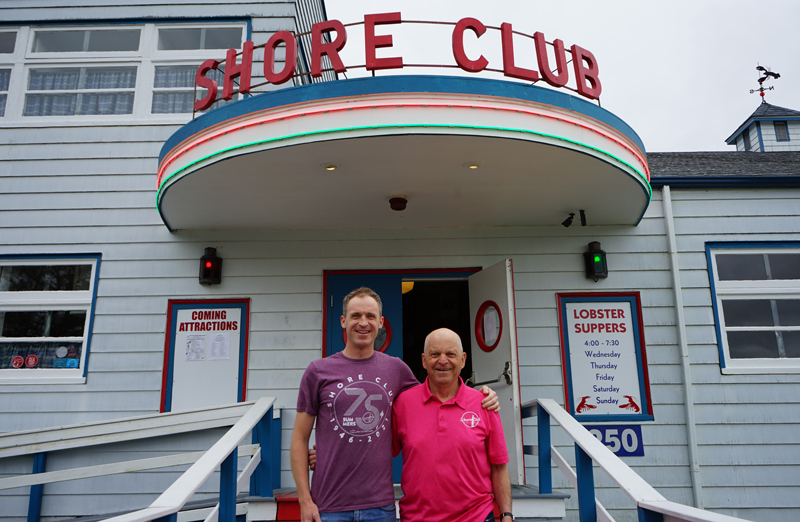
Few family businesses survive the third generation. Fewer still do it in seasonal hospitality. At The Shore Club, where fourth-generation leadership is already taking shape, the Harnish family has spent nearly 90 years proving longevity can be built through embracing both tradition and reinvention.
This summer, the business marks its 80th anniversary season of the dance hall and 90 years since the first lobster boil, a milestone that’s a testament to the endurance of the business – and the Harnish family.
Third-generation owner Rhys Harnish handed over the reins a few years back to his son Luke, who now leads the Shore Club, and nephew Jared Harnish, who oversees the campground. Rhys, whose official title is ‘retired’, has stepped away from decision making, but is never far from the business his grandfather started in Hubbards. “I’m just the busboy now,” he says with a laugh.
The business began in 1936 as lobster cookouts on Hubbards Beach before evolving into a hospitality and entertainment operation anchored by the dance hall the family built in 1946.
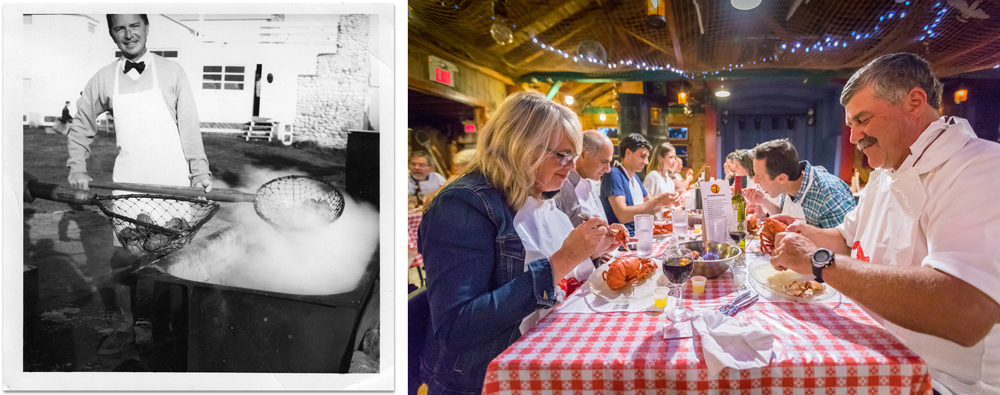
In the early years, there were more than a dozen dance halls between Hubbards and Halifax. The Shore Club was perhaps one of the “fancier joints,” Luke figures, given the guest code of the day: attendees were required to arrive in couples, with men in jackets and ties and women in dresses.
Today, the Shore Club is the only one left standing of its kind, and is widely considered to be Nova Scotia’s “last great dance hall.” Rhys credits that survival to adaptation. When musical tastes shifted in the 1960s, the venue moved from big-band orchestras into rock and roll, forging longlasting ties with performers that have defined Atlantic Canadian music for each generation since.
Shows by Matt Minglewood, who played the venue for nearly six decades, and 21-year veteran Matt Mays have become destination events, drawing audiences back year after year.
Programming is designed to deliberately attract different audiences. That means balancing long-time acts with newer performers, while maintaining what Luke describes as a multi-generational appeal. “We can’t ask the same people to come every single week,” says Luke.
This season, which opens with the first dance on May 2, has not only local favourites, like Joel Plaskett Emergency, Lennie Gallant, Classified, but national stars as well, such as Sam Roberts Band and The Arkells.
Luke estimates only about a quarter of patrons on a typical night are local, with many tourists coming from around the country and beyond – making the Shore Club part of their Nova Scotia getaway. That destination draw has helped insulate the business from relying on a small rural market, while turning the Shore Club into something broader than a local institution.
Traditional Saturday-night dances remain the core product. Alongside them are advance-ticketed concerts, many of which sell out. That two-pronged model of dances and suppers has helped sustain the operation through ups and downs.
“The lobster suppers are our bread and butter,” Luke says. “The music side is what we’re known for.”
Like many hospitality operators, the Harnishes face rising food and labour costs, volatile lobster prices and uncertainty over whether higher travel costs could affect visitor demand. Yet the scale of the business is significant, especially given its rural surroundings. On busy nights, the lobster suppers can serve 250 to 300 diners over a few hours, while concerts may draw roughly double that. In season, the operation employs about 50 people across food service, grounds, maintenance and entertainment production — making it a significant source of jobs in a community of under 700.
That operational complexity has grown as the fourth generation has put its stamp on the company.

Since Luke stepped into ownership, the Shore Club has added more live shows, launched an updated outdoor concert format and opened the Lobster Pot, a new deck restaurant with expanded food offerings.
But growth has been approached as expansion around the core business, not a departure from it. “It’s really honouring the tradition,” Luke says, “to stay within the boundaries of what our niche market is.”
For Luke, succession is about positioning the legacy business to endure. “I certainly want to see year 100,” he says.
That ambition extends beyond the family enterprise, he adds, to drawing people to Hubbards and contributing to the community and broader local economy. That sense of stewardship is part of what has kept performers returning.
Matt Mays calls the venue unlike anywhere else he has encountered. “In all my travels I’ve never felt a bigger feeling in a smaller place,” he says. “It’s the undeniable spirit of the Shore Club that keeps us all coming back.”
For nearly 90 years, the Harnishes have found ways to stay relevant without losing what made people come in the first place. The result is a remarkably resilient local business that’s still finding room to grow.
Similar articles:
Comment policy
Comments are moderated to ensure thoughtful and respectful conversations. First and last names will appear with each submission; anonymous comments and pseudonyms will not be permitted.
By submitting a comment, you accept that Atlantic Business Magazine has the right to reproduce and publish that comment in whole or in part, in any manner it chooses. Publication of a comment does not constitute endorsement of that comment. We reserve the right to close comments at any time.
Cancel