Account Login
Don't have an account? Create One
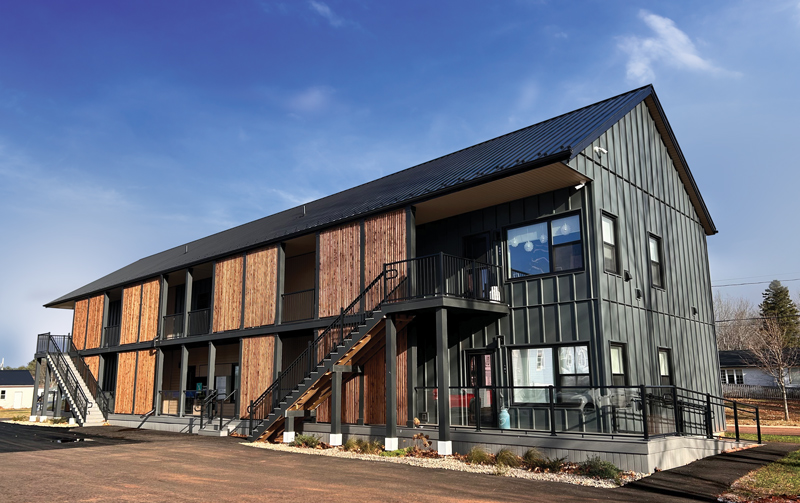
Everyone needs a place to call home.
That fundamental truth has been at the top of Troy Ferguson’s mind for decades. The founder and CEO of commercial modular construction company, 720 Modular, said he started thinking about it during his university years. Between semesters, he planted trees in locations around Northern Canada and was intrigued by how shelters were built. He later landed in the energy sector, on remote sites, working with modular construction. These weren’t cases of shipping containers simply dropped on the ground. They were advanced units of construction, ready and able to be interconnected on-site, rapidly coming together to create larger structures that functioned as comfortable, modern living space for workers.
Working life aside, he’d grown up in social housing and, as he told Atlantic Business, easily recalled the people and stories that illustrated the importance of having a safe place to live.
After 2014, when oil prices crashed, he looked at his options and considered the indicators of Canada’s housing crisis that he was seeing in the news. But he didn’t want his company to build just one house at a time. Instead, he started “spreading the gospel,” as he calls it, about the potential for building homes in Canada using manufactured components. Today, Ferguson’s company has a hearty list of completed multi-modular builds to its credit, with some of the most prominent located in the Maritimes. That includes the largest modular apartment that was in progress in Canada last summer, on Malpeque Road in Charlottetown, P.E.I.
This six-storey, 82-unit building is comprised of modules manufactured by Kent Homes, in Bouctouche, N.B. The modules were shipped to the Island, then craned atop pre-works of concrete and utility connections. Internal hook-ups and other details were finished by an on-site crew. It took less than a year to build, compared with what Ferguson estimates would have been close to three years using traditional methods. The building was paired with a second, 53-unit structure next door. A communications officer for the Government of P.E.I. confirmed the building featured rent set at 25 per cent of income and is intended for people on the province’s social housing wait list.
As with all modular jobs, there were time savings from having component work in the manufacturing facility ongoing simultaneous to site development. Plus, having components manufactured indoors avoided the possibility of weather-related delays.
Continue reading this story: click below to login/subscribe
Login or SubscribeComment policy
Comments are moderated to ensure thoughtful and respectful conversations. First and last names will appear with each submission; anonymous comments and pseudonyms will not be permitted.
By submitting a comment, you accept that Atlantic Business Magazine has the right to reproduce and publish that comment in whole or in part, in any manner it chooses. Publication of a comment does not constitute endorsement of that comment. We reserve the right to close comments at any time.
Cancel