Account Login
Don't have an account? Create One
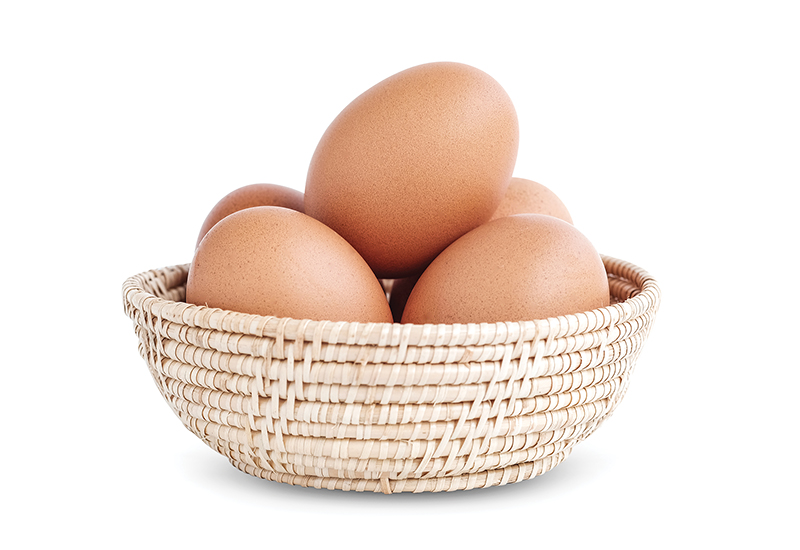
Canadians are spending more and more of their dollars on organic products.
But how much of the organic section in an Atlantic Canadian supermarket can be traced to a farm in the region? The country? The continent? Farmers and producers in the Atlantic provinces recognize there’s a gap to be filled and the local organic industry is striving to meet the rising demand.
Every month, about 14 million eggs make their way from Maritime barns to Atlantic Canadian consumers via Maritime Pride Eggs’ grading facility in Amherst, N.S. But until recently, the organic eggs that bore the egg grader’s logo were shipped in from outside the region.
“We were buying it from our partners in Québec, but we didn’t feel good about that,” said chief executive officer Mark Beal.
So a plan was hatched to retrofit one of the company’s producer-shareholders’ Port Williams, N.S., operation and start filling cartons with certified organic eggs. Consumers responded so well that a new, multimillion-dollar barn was soon built near Fredericton, N.B., for organic egg production.
“Almost all organic eggs that are sold here in Atlantic Canada through Maritime Pride Eggs are locally grown, either in New Brunswick or in Nova Scotia. And we’re pretty proud of that, because it takes a long time to get organic certification,” Beal said.
The Amherst grading facility, along with the organic barns, have all achieved that certification. To maintain it, the product has to be checked regularly to make sure it meets organic standards. The process involves a lot of time, space and money.
At the farm level, you have to buy certified organic feed. There’s only one place to buy it in Atlantic Canada and that’s on Prince Edward Island. It’s usually double the cost per tonne of regular feed,” Beal said.
Then there’s the cost of building or retrofitting a barn to provide ample space for the hens—10.76 square feet per six birds inside and 10.76 feet per four birds outside, to be exact—as well as a winter garden.
Beal feels that the effort has been well worth it. “We’re passionate about meeting the consumers’ needs and wants. They want these products and we want to provide them with a local product,” he said.
The two organic barns are now home to about 16,000 egg-laying hens that produce enough eggs to meet current demand. “But if the organic continues to trend like it is, we’ll probably have to put more production in place,” Beal said.
Sally and Mark Bernard of Barnyard Organics and East Coast Organic Grainery—where Maritime Pride Eggs buys chicken feed for its organic operation—initially started using some of their farm’s grains to feed their own livestock. They didn’t realize how important the feed they produce on their Lower Freetown, P.E.I. farm would become to other farmers in the region.
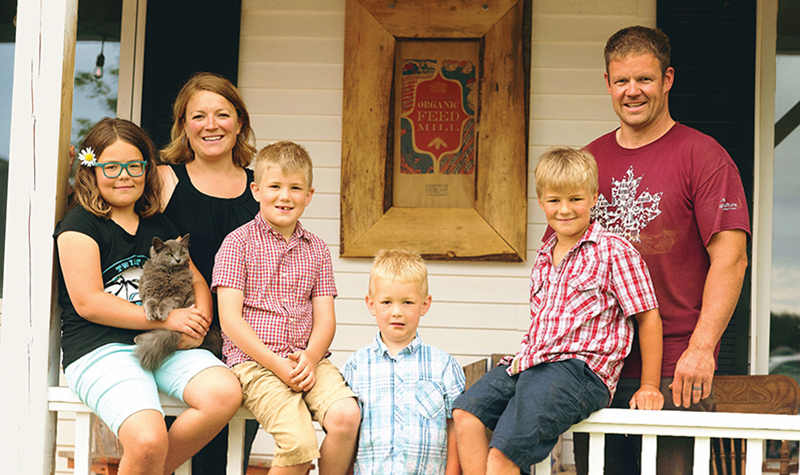
“People started wanting it, because the closest feed we could get was from Ontario,” said Sally Bernard. “So we just sort of dipped our toes in a bit to see what it would take to be a licensed mill and now it’s become a much bigger part of the farm. I’d say that it’s probably the bigger part of our business.”
The feed is made with organic grains grown on the farm, including soybeans, field peas and barley. The only ingredients that come from outside the region are organic corn—which they haven’t been able to source locally—and minerals.
They sell about 500 tonnes of feed per year to retailers, farms and home-steaders; Maritime Pride Eggs is their biggest individual customer. “We’re pretty small in the giant feed world, but we’re supplying the Maritimes and we’re as busy, basically, as we want to be,” Bernard said. “We keep waiting for it to sort of level out, but it keeps increasing, which is great.”
They’ve also had inquiries from Newfoundland and Labrador, but shipping costs have been prohibitive. Getting the product in that province is a work in progress.
The feed operation is the Bernards’ way of contributing to a major gap they see in local production: organic meat. “One of our core values at the farm is to try to increase organic meat production in the Maritimes. That was really what drove us to do the feed mill—even though we didn’t really need another thing—but we decided this was the best way to do it. We couldn’t raise all the beef for everybody,” she said.
“With four kids, we really see the future going ahead and how uncertain it feels with climate change and wild weather …. We just feel if we don’t do something serious now, we’re going to feel like real jerks later leaving this for our kids,” she said. “I really do feel agriculture is the fastest way to slow this down. So we’ve got 500 acres—let’s go.”
— Sally Bernard
She said the desire for organic meat is driven by both ethical and environmental concerns. “We know how much conventional proteins can contribute to climate change issues.
So I think a lot of people are looking to eat less meat, but better meat. I think they’re willing to pay a bit more for what they feel is a really quality product and it would be great to fill those markets.”
The Bernards strive to operate their business in a way that benefits the environment. “With four kids, we really see the future going ahead and how uncertain it feels with climate change and wild weather. And we just feel like, really, agriculture is the quickest, surest way to slow that down.”
They’ve recently partnered with an organic beef farm on a custom grazing project, in which that farm’s cattle are moved from patch to patch on theirs for intensive grazing, fertilizing the soil along the way. The farm has also introduced a no-till drill in an effort to sequester more carbon.
“We just feel if we don’t do something serious now, we’re going to feel like real jerks later leaving this for our kids,” she said. “I really do feel agriculture is the fastest way to slow this down. So we’ve got 500 acres—let’s go.”
The geography of Newfoundland and Labrador, where about 520,000 people are spread out over 405,212 square kilometres, can be a pain for farmers, suppliers, retailers and ultimately, consumers. The reality of high shipping costs, long voyages and expensive produce is most stark in remote communities, such as in Northern Labrador.
That’s why SucSeed, a social enterprise that’s passionate about food and environmental sustainability, travelled to communities such as Rigolet when it started setting up hydroponic gardens to combat food insecurity in 2016.
According to SucSeed, 90 per cent of the produce sold in Newfoundland and Labrador is imported. “If you look at what we’re doing as a country, we’re spending so much money, time and effort to figure out how to grow fresh produce in space,” said Emily Bland, SucSeed’s chief executive officer. “And we still haven’t figured out how to make sure every Canadian has access to fresh produce.”
In the next decade, Smiling Land Farm plans to essentially double the global supply of partridgeberries (or lingonberries, as they’re known in the rest of the world).
Spokesperson Emily Bland said the feat involves planting 50 acres of certified organic partridgeberries on the 400-acre farm in Witless Bay, N.L. “Right now, there’s only about 40 acres of commercial partridgeberry production anywhere in the world,” she said.
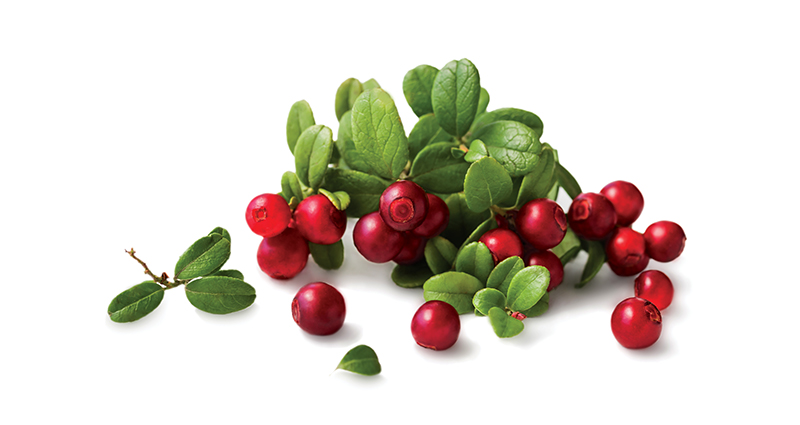
The tart berries are popular in Newfoundland and Labrador, where they grow wild in copious amounts. They’re well-loved in jams and baked goods, but there’s another market the farm plans to tap into. Bland says they’re “one of the world’s super berries” that are being used in cosmetics and as health supplements.
“It’s incredibly healthy for you. You can dehydrate it and it actually keeps the majority of its nutrients, which makes it great as a smoothie additive or just a supportive supplement,” she said.
The farm planted about a quarter of an acre of the berries last year as part of a transplant program with the province’s department of agriculture. This year, they’ll work on propagation. “Our plan is to have it as a food supplement, first of all providing to the local market and then to look at an international market for certified organic lingonberries,” Bland said.
“It’s so needed. Newfoundland is such a special place and we have some incredible resources and people here, so it’s about time that
we’re on the market for international produce.”
Bland’s passion for food security and social responsibility has her laying down more roots on the island. She’s now part of the team managing Smiling Land Farm, one of only two agricultural farms with organic certification in all of Newfoundland and Labrador.
Larry Puddister, executive chairman of industrial services company Pennecon, bought the more than 400-acre farm on the Bay Bulls side of Witless Bay Line in 2019 and his team has worked tirelessly to achieve organic certification.
“A big priority was providing people locally with the highest quality produce and for us, that meant organic. It meant honouring the land. It meant doing what we can to improve it,” Bland said.
There are big plans for the young farm, involving berries (see above: “N.L. farm aims big with ‘super berries'”), bees, produce, dairy and their current biggest seller: duck eggs. “Our duck eggs are literally flying off the shelves. We can’t keep them. We can’t keep the stores stocked,” said Carolyn Campbell, the farm’s livestock manager.
The farm’s duck population more than doubled this summer when 100 ducklings moved in to their 2,000-foot barn. They’re expected to start laying in the new year.
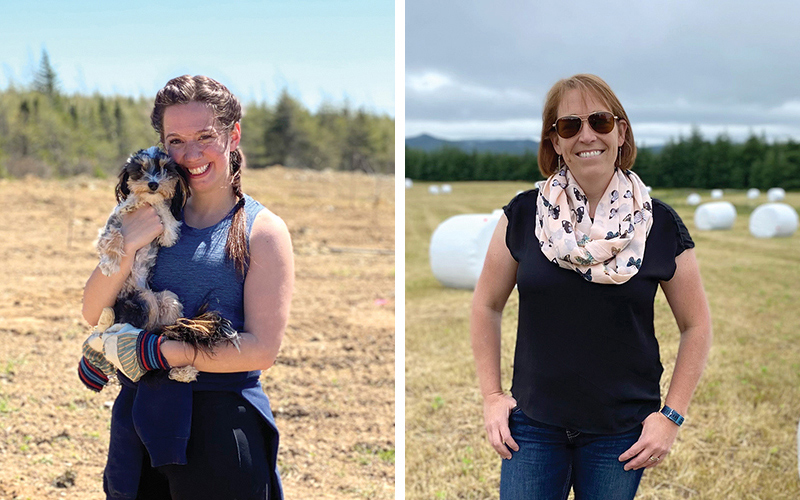
“Our ducks, basically, are living the life,” said Campbell. “Our ducks have access to outside, access to inside. They have a huge amount of nest boxes and things they can climb on and jump down off of. They have indoor water. They have outdoor water. They get organic feed.”
Smiling Land is one of the would-be customers of East Coast Organic Grainery who, because of shipping costs, have had to look further west for feed. But they’re working on a home-grown solution to feeding some other residents of the farm: three million western honeybees.
This summer, the team planted more than 50 acres of forage for them, including white clover, apple trees and berries. The aim is to provide everything they need in their three kilometre fly zone, so they’ll never want to leave the farm—and so the farm will no longer have to feed them organic sugar.
The farm is expecting organic certification for the bees to come through in November, but the bees will get to keep their honey this year; for now, the farm will focus on good management practices.
From sourcing organic seed to picking cutworm off asparagus, Campbell works long days to meet the organic standard. But she wouldn’t have it any other way.
“Personally, I think it all comes down to health. Our health, our kids’ health, the livestock’s health, the planet’s health,” she said. “Organic foods contain fewer pesticides. They don’t contain any GMOs. Organic farming helps reduce pollution. It helps provide a safe, natural environment for the livestock. It enhances the quality of our water and our soil. And, I mean, at the end of it, it enhances the quality of our products. So everything we’re putting out to market should be really, really good quality.”
While acknowledging the challenges of organic farming, she maintains that it’s doable and encourages others to take advantage of resources and supports that are out there, such as the Canadian Agricultural Partnership.
One major support network, ACORN (Atlantic Canadian Organic Regional Network), is in a period of regrowth. Following a rough patch in which the group came close to insolvency, the organization is working on increasing its membership and reintroducing programming.
Guy Gautreau, who became chair of the organization in June, is looking forward to the return of in-person events. He said along with its year-round programming, the network had an annual conference that was considered “one of the best, if not the best, in the country for organic farming.” It’s something he’d like to see on the agenda again in the near future. The conference offered farmers like P.E.I.’s Sally Bernard a chance to connect, collaborate and even commiserate with others in the industry. “We just didn’t really make time for it otherwise, so I think ACORN facilitating those connections was really important,” said Bernard, who acted as ACORN’s president years ago. “They play all sorts of roles, but certainly for me, that was the biggest benefit.”
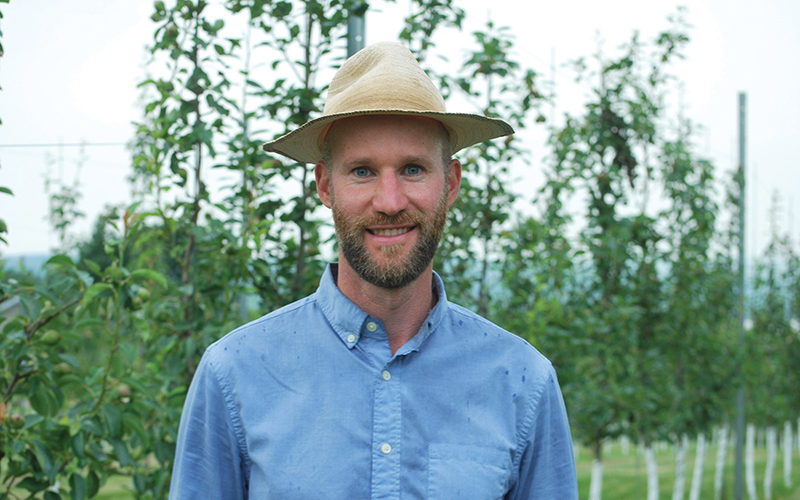
ACORN’s organic directory includes everything from cannabis to cider and sea buckthorn berries. Where Gautreau sees the most demand is in the organic production of basic foodstuffs. “Things like potatoes and carrots, onions,” he said. “There’s always been that demand that’s gone unsatisfied. I think there’s always been a few growers trying to do those things at scale and even when they succeed, they can’t really meet the demand.”
Gautreau uses his own industry (apples) as an example. He works with Verger Belliveau Orchards in Memramcook, N.B. and runs an organic orchard, Ferme Jolivent Farm, with his wife. “We’re producing more and more apples in New Brunswick, but we’re still so far from meeting the provincial demand for apples. So if you start looking at different specific crops … even when you combine organics and conventional together, most of the Atlantic provinces still fall quite short in terms of overall food security.”
With an eye on fostering growth and innovation within the Atlantic organic sector, Gautreau also envisions the region being promoted as a place for experienced farmers and producers to come set up shop. But first, the focus is to revive the network and reinstate supports for Atlantic Canada’s organic industry.
Comment policy
Comments are moderated to ensure thoughtful and respectful conversations. First and last names will appear with each submission; anonymous comments and pseudonyms will not be permitted.
By submitting a comment, you accept that Atlantic Business Magazine has the right to reproduce and publish that comment in whole or in part, in any manner it chooses. Publication of a comment does not constitute endorsement of that comment. We reserve the right to close comments at any time.
Cancel