Account Login
Don't have an account? Create One

Tyler Noiles moved to Prince Edward Island and started building his career in the videogame industry just under 15 years ago. Last year, he was leading a small Island studio owned by Electronic Arts (EA) when the company told him it was quietly shuttering the location. It left him asking: “What now?”
When a “new economy” industry is so new or concentrated that it’s dependent on just one or two operations, a single closure can be a devastating hit. It can set the people responsible for economic development and diversification back to a very difficult square one. And it can leave skilled professionals racing for larger centres during the struggle to rebuild.
On the other hand, a more mature and diverse industry has the strength to carry on when one or two participants are sidelined, offering new opportunities for displaced workers. If recognized and supported, it can also arguably flip the bad news to good, bolstering other local businesses in the same industry or leading to new start-ups.
In the first example, a closure leads to the question of: “Do I stay, or do I have to go?” In the other, the question is more of Noiles’ “What now?”
Noiles said EA was supportive in the transition. And while deciding what he would personally do next, he felt the encouragement of colleagues from the Island’s no-longer-infant gaming industry. Late in the year, a contact at Crown corporation Innovation PEI asked him if he had thought about starting his own studio.
“I just kind of chuckled and said ‘No, I don’t think so,’” he recalled. “Fast forward a month later and I’m back in the office saying, ‘So if I did start a company…’”
He obviously had experience in game art and development work, having handled well-known intellectual property (IP) in addition to new concept work. He also had experience in management and had personally picked talent from university and college programs in Atlantic Canada, fostering the professional development of other workers now skilled in art and animation, working with big-name IP from The Simpsons to Star Wars.
After reaching out to a few people, Noiles decided to take the plunge. His new studio—The Lost Pixels—had a committed team and its first contract before it was even incorporated. He brought the first employees on board at the start of February of this year. He hired seven professionals whose work he knew, and who were eager to continue to live and work on the Island.
“Knock on wood, but it’s turned out pretty well,” he said, speaking to Atlantic Business Magazine in late May, referencing contract work ongoing through the year.
Noiles made a point to credit Innovation PEI and the efforts of the Government of Prince Edward Island in helping his “new economy” business get started, and for being mindful of the opportunity to be had from tapping into the global videogame industry.
“The P.E.I. government has actually been really easy to work with. They listen and even understand things like the difference between a quarterly rebate and a yearly rebate. That stuff makes a difference if you need capital and you’re a small company,” he said. “They make some smart decisions on behalf of the tech industry here that I think has really allowed the industry to continue even through tough times and we’ll probably continue to grow.”
Earlier this year, the head of Canadian operations for the Other Ocean Group, Deirdre “Beep” Ayre, was named Memorial University of Newfoundland and Labrador Faculty of Business Administration’s P.J. Gardiner 2021 Entrepreneur of the Year. Ayre established Other Ocean’s first videogame development studio on P.E.I. in 2006. She actually recruited Noiles for that operation, when he was coming out of college in Miramichi, New Brunswick, before he was later recruited for EA’s studio.
Ayre said Other Ocean went to P.E.I. in the first place largely because of the engagement and efforts of the bureaucracy. Her brother had started a videogame company in 1991. In the mid-2000s, he was based in California and the well-established company was looking to set up another studio, potentially in Atlantic Canada. Ayre was asked if she would take on the job of scouting and advising on feasibility. She eventually was asked to launch the new outfit.
“They (P.E.I.) totally rolled out the red carpet,” she recalls of the evaluation period, remembering she was contacted (and not the other way around) by staff with TechPEI, a precursor to the work of Innovation PEI.
People within the government had “done their homework”, said Ayre, and made an effort to learn about her, the company, the industry and their potential future needs. An early meeting she had in P.E.I. included government representatives responsible for business, but also for population growth, sitting side-by-side with representatives from Holland College and the University of Prince Edward Island.
“TechPEI understood that it wasn’t going to be just throwing us a few incentives that was going to make this work,” Ayre said.
The outreach and welcome was an extension of Gameplan, a 2005 strategy developed by government staffers with the thought that gaming would be a viable option for diversifying the Island economy. The strategy led to the creation of Gameforce, an after-school program teaching kids how to create games and promoting careers in the videogame industry. It encouraged the development of new curricula at Holland College (including a two-year diploma in video game art and animation) and at UPEI (a Bachelor of computer science with a specialization in video game development). It also included government incentives for new businesses, including the offer of office space for early-stage start-ups and a video game labour rebate.
Other Ocean found early success through its P.E.I. studio with Apple products and mobile games, thanks to the growth in iPhone sales. In 2007, the company started a quality assurance company called Sculpin QA. It expanded in 2016, allowing for Sculpin to develop new, original IP. As the years passed, some Other Oceans staffers began their own ventures and new businesses were started by people drawn to the P.E.I. lifestyle and energy in the close-knit Island industry. The businesses all worked collaboratively to offer jobs to skilled workers when there was a downturn for one operation or another. They put great effort into keeping skilled individuals on the Island for as long as possible, regardless of who they worked for.
“There is a fierce loyalty (today) among many senior game developers on P.E.I., not all of whom grew up here,” Ayre said.
Eventually handling larger IP, Other Ocean Group and its project partners were nominated in 2018 for an Emmy Award, based on a Rick and Morty tie-in game. The company more recently had the successful release of a new title: Project Winter.
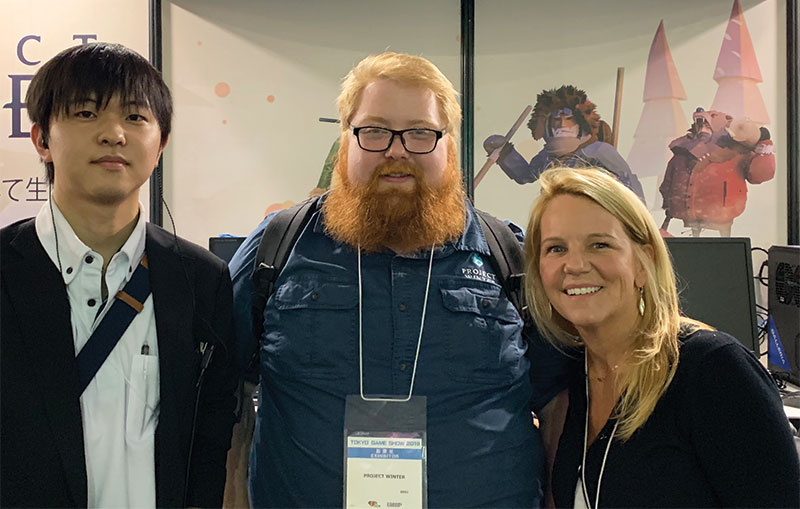
The company operates in P.E.I. today alongside a collection of others including The Lost Pixels, Rabbit Hole Studios, Queen Bee Games, Blepco Games, Agama, Funky Finger Productions, Mighty Pebble and a studio established by mobile giant Kabam (Kabam Acadia).
“Probably the greater Charlottetown area really doesn’t have any awareness of how many people here work in the video game industry,” said Ryan Filsinger, running Kabam’s studio. His staff sync and work with other Kabam teams in studios from Austin, Texas, U.S.A. to Vancouver, B.C.
Currently chair of industry association Videogames P.E.I., Ayre estimates about 250 people in Charlottetown, with its total population just over 36,000, work directly in video game production, in addition to employees at supporting businesses including sound studios.
“We are actually in the middle of securing funding to have a new (industry) strategy,” she said. In a turnaround made possible through the advancements and new businesses started since 2005, the strategy to replace the province’s Gameplan will be industry-led.
The emergence of the videogame industry has been a reminder to Islanders of how quickly emerging technology can offer new opportunities. Looking back, a 1998 Institute of Island Studies paper found fewer than 22 per cent of the province’s households even had computers the year before, compared to over 25 per cent in each of the other Atlantic provinces and 36 per cent for the country. Compare that to the CRTC’s 2019 Communications Monitoring Report, which showed 92 per cent of Canadian households have a household-based internet connection and 82 per cent of Canadians have a mobile data plan.
Biosciences boost
Collaboration has also been a success factor for the bioscience industry, helping procure everything from essential staff to equipment. Even more broadly based than gaming, bioscience includes science-based contract manufacturers, pharmaceutical industry companies and producers of animal health products.
The estimated economic impact of the bioscience sector on P.E.I. (sometimes referred to as the cluster or ecosystem), as defined by the PEI BioAlliance, has doubled in four years. It continued to grow during the pandemic.
In 2018, the PEI BioAlliance estimated there were 42 private companies in bioscience on the Island employing about 1,300 people. Just three years later, the estimate is 60 companies, employing more than 2,200 people, with private business also supported by the related research and development work of at least seven organizations, including public-private partnerships with post-secondary institutions on P.E.I. and beyond.
“In 2019, private sector companies [in Island bioscience] earned over $260 million in revenue, attracted $38 million in new investment and spent more than $100 million on new equipment and facilities,” stated a rep for PEI BioAlliance in response to questions. “Our targets for 2025 are: $500 million in private sector revenue, 3,000 people employed and $50 million in private sector investment a year.”
Bioscience is exceeding expectations and hitting its stride by all appearances, but it hasn’t been luck, lightning or an entirely smooth path. The sector started off as just one or two businesses, working in specialized manufacturing, dating back to around 1970. An early participant was Diagnostic Chemicals Ltd. (DCL), started by Regis Duffy and offering diagnostic testing. DCL started a chemical division (Biovectra) and began manufacturing chemicals and biochemicals, including pharmaceutical ingredients.
The not so particularly robust “cluster,” as recounted in a BioAlliance written history, was helped along when business leaders were met in the 1990s by a handful of Island-based scientists and bureaucrats interested in fostering the bioscience sector in the name of economic diversification. There was a collective effort to make connections between the private businesses and research centres, including the Atlantic Veterinary College, the Food Tech Centre and both Canada Food Inspection Agency and AgriFood Canada operations. Together, they identified new opportunities, particularly activities linking P.E.I.’s traditional fishing and agricultural activity to new food and health products.
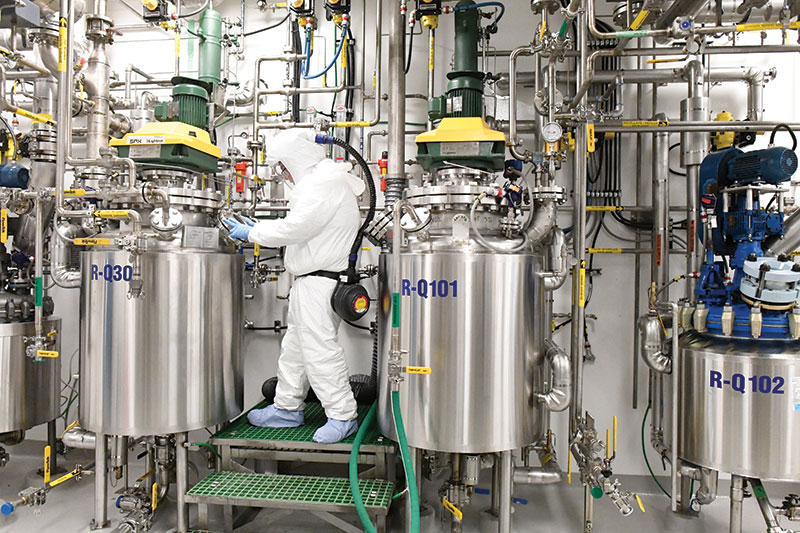
The province engaged, first by talking about “bioscience” as a sector. It started appearing as a more meaningful item in multi-year economic development planning. A bigger step was landing construction of a 57,000-square-foot building for the National Research Council’s Institute of Nutrisciences and Health, with both provincial and federal financial contributions. By the mid-2000s, there was a tax incentive package offered for bioscience companies willing to relocate to P.E.I., then the creation of a research park, new UPEI MBA programs specific to bioscience businesses and the 2009 founding of “Canada’s Smartest Kitchen” as a research and development arm of the Culinary Institute of Canada at Holland College, offering businesses an institutional partner for research and product development.
As time passed, more bioscience companies were launched, some surviving and some not. There were a few acquisitions from some larger, international corporations, including the 2011 acquisition of Genzyme Diagnostics PEI by Japan’s Sekisui Chemical Company Ltd. In animal health, companies like Elanco (an Eli Lilly animal health arm) moved in, bringing more international attention and capital.
For both bioscience and videogaming, P.E.I.’s deputy minister for Economic Growth, Tourism and Culture, Erin McGrath-Gaudet said their approach has been to incentivize but not pay for private business. A labour rebate, for example, means provincial cash flows only after jobs are created, rather than an upfront grant.
“That’s one of the ways that we try to make sure we’re there to support industries and we’re going to be a key partner, a supportive partner, in their growth and development, but that we also want to make sure that we’re being good stewards of tax dollars as well,” she told Atlantic Business Magazine.
McGrath-Gaudet said the government is always open to collaboration with an industry in a more infant stage of development but when it comes to financial incentives, there will always be checks on the return on investment. “So far with those two (gaming and bioscience) … any of our evaluations have come back and shown that there is net positive for the province of P.E.I. and for the taxpayers of P.E.I. when we go down that road,” she said.
Industries including aerospace are already on the map and Premier Dennis King has made clear his government sees “clean tech” as the next frontier. The bureaucracy has been tasked with finding ways to use a wave of new investment from the federal government and private industry to establish a healthy clean tech sector on the Island.
There are also offshoots emerging from the work to date in bioscience and other areas, as it increasingly intertwines with more traditional agriculture, fishing and tourism. More and more, there are anecdotal examples of someone whose grandparents or great-grandparents were family farmers, now using P.E.I. produce and specialty ingredients for small-scale manufacturing. Increased reliable transportation options since the opening of Confederation Bridge have made fresh food product development more viable than ever.
The new agriculture
It’s cliché to say the only constant is change, but UPEI History professor Edward Macdonald has made a study of tracking significant changes over time.
In a 2019 university Vital Signs report, he noted just how much the Island has shifted. The agriculture industry, for example has come a long way from the time of the 100-acre family farm. Around 1901, Macdonald notes, there were just under 14,000 farms on P.E.I., with an average 87 acres. “A high proportion of the island was being farmed and it was being farmed from small farms,” he reiterated, when speaking to Atlantic Business Magazine.
Just 40 years later, the total number of farms had fallen to just over 12,000, averaging 96 acres. And it continued to drop, declining rapidly after the Second World War.
By the 1950s and into the 1960s, more road was being paved on P.E.I. and rural electrification was underway. Lifestyles were changing. The province wasn’t closed off to the world before, but Islanders now had global culture being beamed straight into their living rooms. Ideas about what job opportunities, education and earnings should be became more pervasive, and many young descendants of traditional farming families would abandon agriculture altogether.
At the same time, the federal government was pushing farm “modernization,” leading to a consolidation of small, family farms. By 1961, there were only 7,335 working farms on P.E.I. or, as Macdonald notes, nearly half the total from the turn of the century, with an average of about 131 acres. The island tended less acreage overall and further consolidation was on the horizon.
A landmark, 15-year, joint federal- provincial “Comprehensive Development Plan” for the Island’s social and economic development was signed in 1969. The focus was—in a note familiar to many in Atlantic Canada—on transforming P.E.I. from a “have not” to a “have” province, less dependent on federal transfers.
A Land Development Corporation (a Crown corporation) was established and began actively buying out farmers who were willing to sell, with the province trying to reallocate land to more efficient use and increased holdings for existing farmers, theoretically making existing farms more viable long-term.
Specialization was encouraged, with increasingly fewer mixed farmers and more “pig farmer,” “dairy farmer” titles, along with a monoculture approach where the family farmers—and increasingly farm corporations—opted to focus on just one or two crops. P.E.I. was not always synonymous with potatoes, and certainly some of the modern reputation and production can be traced back to this time. “That’s the monoculture that received the most attention and the number of acres of potatoes planted soared in the period after 1970 particularly,” Macdonald said, adding the total number of farms continued to plummet.
“By the 1970s and ‘80s, the majority of people living in the country were no longer farmers. And that’s even more true now. The latest StatsCan figures that we have, in 2016 the number of farms on Prince Edward Island had fallen to 1,353. So that’s almost exactly a tenth of what it had been in 1901. And the average acreage had gone from 87 acres in 1901 to 425 acres (…) So that’s an enormous social and demographic change,” he said.
Plenty of Islanders still live in what the Census defines as rural area, but very few live on working farms. “So the landscape is still controlled by farming, farming is still the number one industry, but it’s the number one industry conducted by ever-fewer farms and those farms are increasingly corporate entities,” he said.
Macdonald doesn’t describe the shift as a good or bad thing. “It’s a thing,” he simply says, in the same way farmers are employing far more technology and machinery in their continuing work today. But he is interested in how Islanders in growing cities or “rurban” areas, increasingly removed from farming, will view and use the land, highlighting the fact the agricultural landscape is the backdrop on which the modern tourism industry was built.
He’s also interested in where the trends go from here. How, for example, will the work-from-anywhere thinking that emerged during the pandemic affect future population growth and business development?
The answer is for future historians to record. Still, it’s fair to say that the Island’s prosperity lies in embracing diverse opportunities. Game on. •
Comment policy
Comments are moderated to ensure thoughtful and respectful conversations. First and last names will appear with each submission; anonymous comments and pseudonyms will not be permitted.
By submitting a comment, you accept that Atlantic Business Magazine has the right to reproduce and publish that comment in whole or in part, in any manner it chooses. Publication of a comment does not constitute endorsement of that comment. We reserve the right to close comments at any time.
Cancel