Account Login
Don't have an account? Create One
A disease called MSX has wiped out most of P.E.I.’s oysters and shattered the economics of a $20-million industry. The science points to a way out—but two years in, the hatcheries they need still don’t exist.
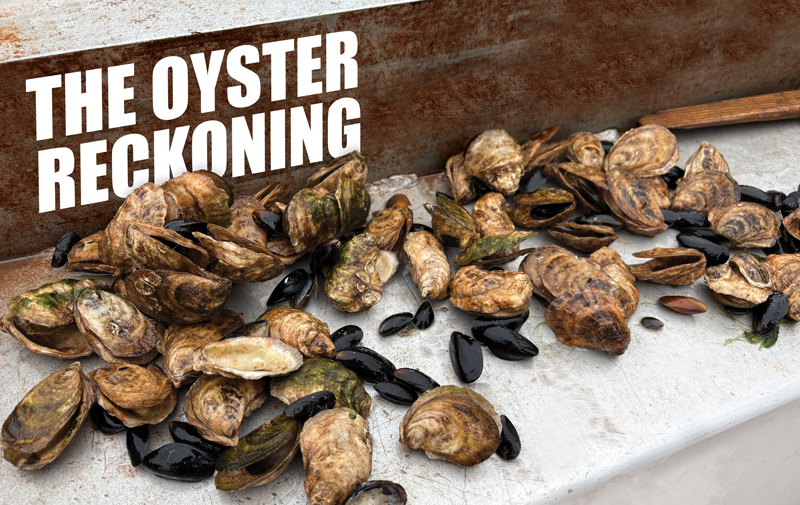
Most are gaping open, nothing more than empty shells. I poke through them and find exactly one still alive—and I can’t help but wonder what it might look like if I opened it up.
I’m on a tour of Atlantic Aqua Farms’ oyster lease at the mouth of Wheatley River on the North Shore of Prince Edward Island. These oysters were infected by MSX, a disease that is killing oysters all around the Island. MSX is harmless to humans. It’s even harmless to mussels, the other iconic P.E.I. shellfish, which have been living happily in the same cage where the oysters died. But the disease weakens oysters to the point where they can’t hold their shells closed, and then something swims in and eats them.
It’s been a fast-moving tragedy.
In July 2024, the provincial government announced that MSX had been found in Bedeque Bay, near Summerside. A year later came the discovery of dermo—a second parasite, similarly deadly to shellfish. Oyster growers went into the winter of 2025/26 with a sense of dread.
“Everyone sunk their cages thinking, what’s going to happen in the spring? And for the majority of people in Prince and Western Queens [counties], what happened in the spring was, everything’s dead,” said Peter Warris, executive director of the P.E.I. Aquaculture Alliance.
The model the entire P.E.I. oyster industry was built on has been upended—and that is the real story unfolding in these waters. Given the experience of other stricken areas, the diseases will destroy almost all of the province’s oysters. The fix is known: disease-resistant seed, bred in hatcheries, the way the industry already works down the Eastern Seaboard. But the infrastructure to produce that seed at the scale P.E.I. needs does not yet exist, and the fight over who builds it—and who pays—is now the central drama of an industry trying to survive.
Continue reading this story: click below to login/subscribe
Login or SubscribeComment policy
Comments are moderated to ensure thoughtful and respectful conversations. First and last names will appear with each submission; anonymous comments and pseudonyms will not be permitted.
By submitting a comment, you accept that Atlantic Business Magazine has the right to reproduce and publish that comment in whole or in part, in any manner it chooses. Publication of a comment does not constitute endorsement of that comment. We reserve the right to close comments at any time.
Cancel