Account Login
Don't have an account? Create One
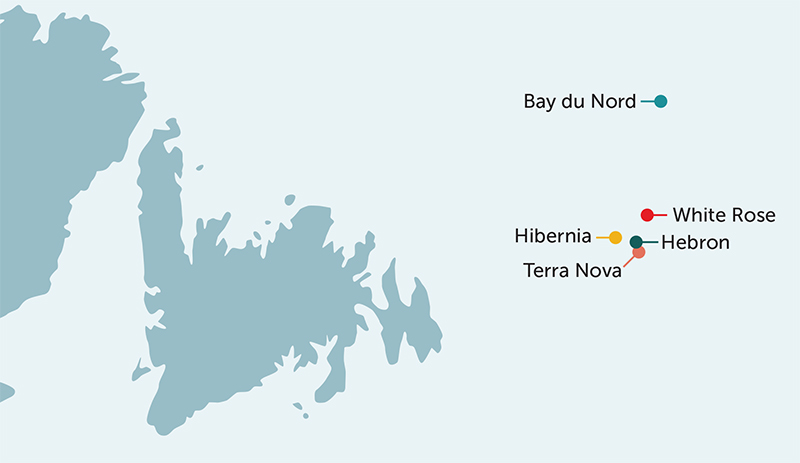
Offshore N.L.’s current project pipeline: two projects with a lot of mileage ahead of them, two projects running out of steam and one strong ‘maybe’.
First oil: Nov. 17, 1997
Estimated life of field: 2040+
Daily production: 106,565 bbls/day (May 2021)
Cumulative production: 1,192 MMbbls (as of May 31, 2021)
Remaining proven reserves: 278 MMbbls
Remaining proven and probable reserves: 452 MMbbls
Remaining proven, probable and possible reserves: 758 MMbbls
Status: deferred (decision possibly later this year)
First oil: possibly 2025
Resource estimate: 300 MMbbls
First oil: 2005
Estimated life of field: unknown
Daily production: 17,906 bbls/day (May 2021)
Cumulative production: 256 MMbbls (as of May 31, 2021)
Remaining proven reserves: 61 MMbbls
Remaining proven and probable reserves: 148 MMbbls
Remaining proven, probable and possible reserves: 231 MMbbls
First oil: 2002
Estimated life of field: unknown
Daily production: 0/ bbls/day (May 2021)
Cumulative production: 425 MMbbls (as of May 31, 2021)
Remaining proven reserves: 34 MMbbls
Remaining proven and probable reserves: 81 MMbbls
Remaining proven, probable and possible reserves: 115 MMbbls
Start date: Nov. 2017
Estimated life of field: 30+ years
Daily production: 135,995 bbls/day (May 2021)
Cumulative production: 136 MMbbls (first 43 months)
Proven reserves: 336 MMbbls
Proven and probable reserves: 571 MMbbls
Remaining proven, probable and possible reserves: 839 MMbbls
(By Atlantic Business Magazine)
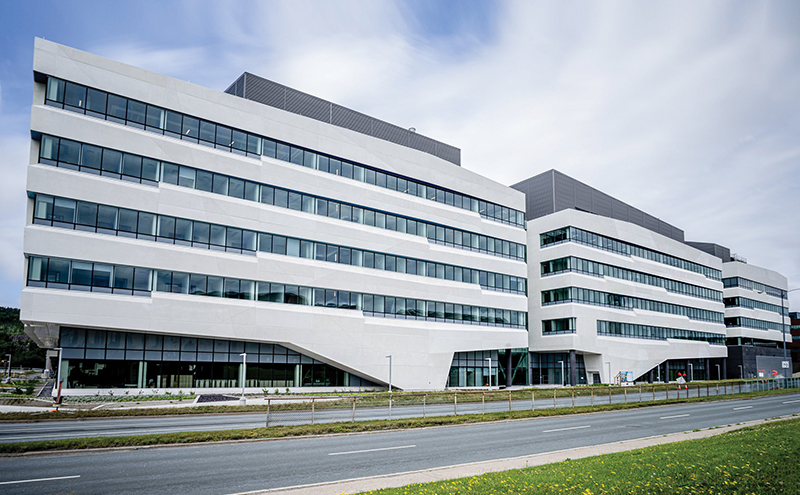
Memorial University of Newfoundland and Labrador has unveiled its highly anticipated new Core Science Facility. The five-storey building at the corner of Arctic Avenue and Clinch Crescent in St. John’s features new labs, research areas and space for private sector partnerships.
Encompassing 480,000 square feet of space—stretching the length of two NFL-size fields end-to-end—it includes modern labs equipped with about 190 fume hoods, 250 sinks and over three kilometres of counter space.
“To give you some context, our existing Science building, that was opened in 1963. It was developed before we knew what DNA was,” noted MUNL academic vice-president Mark Abrahams, who described the development of the facility as a “once in a career opportunity,” during a media tour.
The building isn’t a one-to-one replacement for any existing structure on campus. It will include space for the Departments of Biochemistry, Biology and Chemistry in the Faculty of Science, but also room for the Department of Electrical and Computer Engineering in the Faculty of Engineering and Applied Science, alleviating some of the squeeze for space in the existing engineering building. The new building will also accommodate the Technical Services’ Cryogenics Facility, the Faculty of Science’s Central Stores Facility and an Aquatics Facility that is part of Memorial University’s Animal Care Facilities. A “shell space” or blank-slate area has been reserved for university-industry collaborations, with the Ocean Frontier Institute expected to set up shop to start.
There is local flavour in the design by HOK and Hearn Fougere Architecture, said to have been inspired by the province itself. The white exterior, with its angled rather than entirely flat surface paneling, evokes the idea of an iceberg as it floats past.
Inside, there are effectively three sections or “pavilions” of laboratory and research rooms, separated by two, open atria. The effectively named “whale atrium” is the heart of the facility. Through the main doors on the ground floor, all eyes will be drawn up to a full, blue whale skeleton, backlit by large windows flooding in light. The skeleton is from a whale that died on shore at Rocky Harbour in 2014. MUNL prepared it for display in partnership with the Royal Ontario Museum. While there is a 98-foot (30 metre) high ceiling on the namesake atrium, the whale skeleton is 82 feet (25 metres) long and will need much of the room. The other open space has been dubbed the “Shoreline Atrium.”
It’s not a straight addition to MUNL’s overall square footage. The future of the university’s existing Science building is under discussion. It will ultimately either come down completely or three of four wings will be demolished, and one wing completely renovated in a future undertaking, with no decision date set.
For those familiar with the campus, the new building is linked to the University Centre, but the university is interested in establishing another pedway, pedestrian link, with the Education building. There are no detailed plans or funding in place for the additional pedway yet.
Construction on the Core Science Facility was started in 2015 by Baraco, foundations came under a contract with Pomerleau and the building was completed in a final contract package to Marco Services.
Includes $99.9 million from the Government of Canada and $25. 1 million from the Government of Newfoundland and Labrador
According to the university, the new Core Science Facility needed just over 1.1 million pounds of mechanical duct work. The exterior covering required 912 concrete panels, with a total weight just over 10 million pounds

The Shediac Smart Energy Community Project is investigating how utilities can manage the integration of small-scale renewable energy resources and new devices on the grid. The project is a partnership between NB Power, Siemens Canada and the Town of Shediac.
“A solar panel on a house, a battery in a basement, a smart water heater, a smart thermostat, a heat pump that stores energy—there’s a whole variety of devices that exist and are imagined that are going to cause both tremendous challenges and also opportunities as well for utilities,” said Brent Staeben, the project lead and director of Smart Grid Atlantic.
One of the primary challenges utilities will face, Staeben said, is visibility—the ability to see how energy is being used, stored and fed back into the grid. To better understand how the devices are used, the project is monitoring the energy usage of about 600 Shediac households.
“The residential study is going to deploy smart thermostats, smart water heaters, solar, Tesla Powerwalls, Stash heat pumps, devices essentially that will go out in homes,” Staeben said. “With smart meters and with communications, we’ll be able to understand and have visibility on how that customer is using those assets.”
Staeben added that some customers will also offer NB Power the ability to control the devices remotely—delaying a water heater’s start by two hours, for example, to test time of day usage rates.
The project also has two more components: creating a 1.63-megawatt community solar farm and converting two commercial buildings, the Government of Canada Pension Centre and the Town of Shediac’s Multipurpose Centre, to net-zero through energy efficiency upgrades and smart technologies, including battery storage. The solar farm is expected to be online by the end of 2021, Staeben said.
The Shediac project stems from $35 million which was allocated in 2019 to Siemens Canada, New Brunswick Power and Nova Scotia Power through Canada’s Strategic Innovation Fund to research and develop “smart grid technology” to better manage the electricity needs of the two provinces. A similar project is underway in Amherst, N.S.

The Central Newfoundland Gold Belt (CNGB), which spans the island, now hosts several large mining companies—including Sokoman Minerals and New Found Gold—hoping to stake their claim to its rich veins.
Leading the rush is Marathon Gold, which began its exploration of the CNGB back in 2010. The company’s proposed mine, the Valentine Gold Project, is currently undergoing environmental assessment and, when completed, will be the largest gold mine in Atlantic Canada. The project is 100 percent owned by Marathon.
Marathon’s CEO, Matt Manson, said the CNGB’s geology is “very prospective” for gold mineralization and deposits but past mining activity around Valentine Gold Project’s locale, namely the long-lived Buchans mine 80 kilometres to the northeast, has primarily sought base metals, like copper, zinc and lead.
“We like to think that Marathon has opened the eyes of the exploration community to the potential for bigger scale gold deposits,” Manson said in an interview. “There’s been 10 years now of diligent exploration, progressively growing with every season of drilling.”
Valentine Gold Project is expected to produce about 173,000 ounces of gold a year, Manson said, which is a sizable resource when compared with past gold mines in Newfoundland’s Baie Verte Peninsula, which would typically produce 30- to 40-thousand ounces in a good year.
But there are reasons besides central Newfoundland’s geology that make the area optimal for mining gold, Manson explained. “We have a government … [and] a labour market that understands our business in the context of doing everything in the correct and professional way,” he said. “I can’t say enough good stuff about Newfoundland and Labrador as a business jurisdiction.”
Although Marathon will most likely be the first company to break ground on the CNGB, Manson said, it won’t be the last. “We’ll be the first one out the gate with a mine,” Manson said. “But I think it’s safe to say at this stage that there will be additional gold mines discovered and developed within the central Newfoundland region with all of this exploration that’s going on.”
On May 5, Marathon and Qalipu First nation announced the signing of a socio-economic agreement for the Valentine Gold Project, which addresses things like access to employment for Qalipu members and businesses. Marathon is now working towards a similar agreement with Miawpukek First Nation. Manson said he expects to break ground on the project early next year. •
The Slemon Park Microgrid Project, a 10-megawatt solar array, will occupy 100 acres of the former site of CFB Summerside, now a business park and residential community. The project is expected to increase P.E.I.’s renewable energy usage by 3.5 per cent.
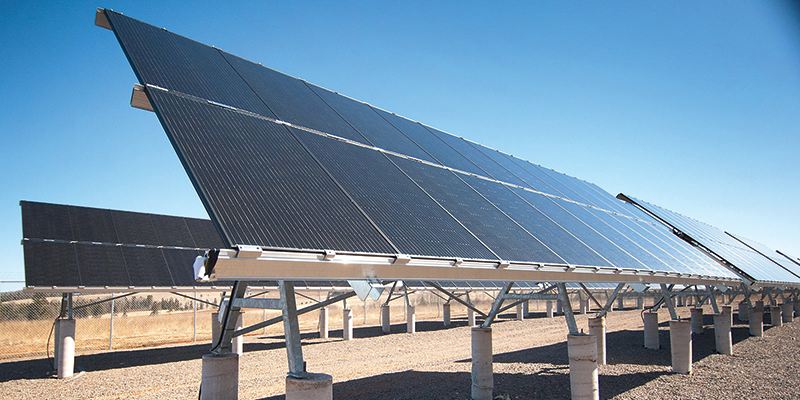
“This project will reduce GHG emissions and our reliance on imported power,” P.E.I. Energy Minister Steven Myers said in a news release.
The Government of P.E.I. will spend $12.7-million on the project, while the federal government will contribute $12.3-million through the Green Infrastructure Stream and the Smart Grid Program.
In the release, Canada’s Minister of Infrastructure and Communities, Catherine McKenna, touted the province’s continued progress towards energy independence. “The people of Prince Edward Island are blazing a trail to energy self-sufficiency,” McKenna said. “The Slemon Park Microgrid Project is another big step in building strong, sustainable communities.”
She added that the project will provide a “clean, continuous source of electricity” for Slemon Park residents and businesses.
The project will also feature a large battery to store energy generated from the solar array, according to Natural Resources Canada. The resulting microgrid will be configured in a way that allows it to connect to the main grid or run independently. •
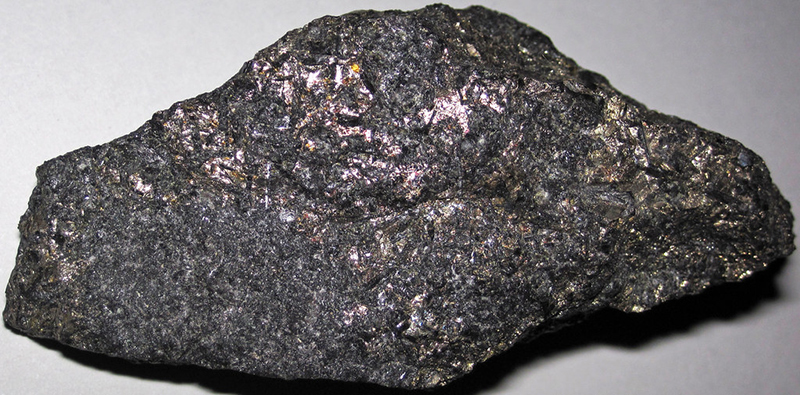
Update: Voisey’s Bay underground expansion
Construction of Vale’s under-ground nickel mine in Voisey’s Bay, Labrador is now 66 per cent complete with over 800 people working on the project. The company, headquartered in Brazil, says over 7.2 million hours of work have been logged since the start of the project without a lost-time injury. Reaming of the Reid Brook internal escapeway is now complete and the installation of the ladderway has commenced. A total of 57,471 freight tons were safely loaded, transported and unloaded in June 2021. Vale says it added additional dorms to support the summer construction season. •
* “Sulfidic gabbro (nickel ore) (Voisey’s Bay Ni-Cu-Co Magmatic Sulfide Deposit, Mesoproterozoic, 1.333 Ga; Voisey’s Bay Mine, Labrador, Canada) 3” by James St. John is licensed under CC BY 2.0
Comment policy
Comments are moderated to ensure thoughtful and respectful conversations. First and last names will appear with each submission; anonymous comments and pseudonyms will not be permitted.
By submitting a comment, you accept that Atlantic Business Magazine has the right to reproduce and publish that comment in whole or in part, in any manner it chooses. Publication of a comment does not constitute endorsement of that comment. We reserve the right to close comments at any time.
Cancel