Account Login
Don't have an account? Create One

Geographically, the province defines Iceberg Alley as stretching “from the coast of Labrador to the southeast coast of the island of Newfoundland.” This year, no icebergs were spotted south of 48 degrees north in the Northwest Atlantic, a fact that worries Marieke Gow, co-owner of the Artisan Inn and Twine Loft restaurant in Trinity, Trinity Bay.
“As a provincial marketing piece, it’s one of the things that brings one of the highest levels of attention from international tourists to Newfoundland,” she said. “It helps give us a competitive edge. If someone really wants to go see icebergs, they’re not planning a trip to Ontario.”

Gow said the publicity helps fuel demand for next year’s bookings, so she wonders what impact the lack of icebergs this year will have on demand next year. She also has concerns about how abundant icebergs will be in the years and decades to come. “Are we at a point that this is the new normal or is this just one of the slower iceberg seasons and next year it’s going to be amazing again?” said Gow.
According to a paper by two Fisheries and Oceans Canada officials published earlier this year titled “A climate index for the Newfoundland and Labrador Shelf”, iceberg numbers have been tracked since 1900 by the International Ice Patrol and the U.S. Coast Guard. The report notes that the 121-year average for annual iceberg numbers is 495. Since 1900, there have only been three years where zero icebergs were spotted: 1966, 2006 and 2021. Sprinkled in there was a booming 2019 in which 1,515 icebergs were spotted, making it the year with the seventh-largest number of sightings since 1900.
Lev Tarasov is a professor at Memorial University and the Canada Research Chair in Glacial Systems Modelling. He said most of the icebergs spotted off Newfoundland come from Greenland. Waves pummel the icebergs and fill the crevices with water, which leads to large chunks breaking off. Thanks to wind and currents, they slowly float and make their way to Newfoundland and the Baffin Bay. Tarasov said the zero icebergs spotted this year is “unusual, but it’s not impossible.” Longer term, he worries about less sea ice and warmer temperatures in the Labrador Sea. “Over the next 100 years, on average, I would expect fewer and fewer [icebergs],” he said.
Since 1900, there have only been three years where zero icebergs were spotted: 1966, 2006 and 2021.
Tarasov isn’t just concerned about icebergs. “Sea ice is also for infrastructure,” he said. “It protects shorelines in the winter when you have strong winter storms. Winds coming off the Labrador Sea can be pretty intense and sea ice basically gives you blankets. That’s why it partly protects the icebergs and protects the coastline. We’re going to have enhanced erosion, enhanced impact on coastal infrastructure. Those are just some bits and pieces to do with sea ice alone.”
Tarasov worries about the impact rising temperatures will have on the entire marine ecosystem. He’s not alone.
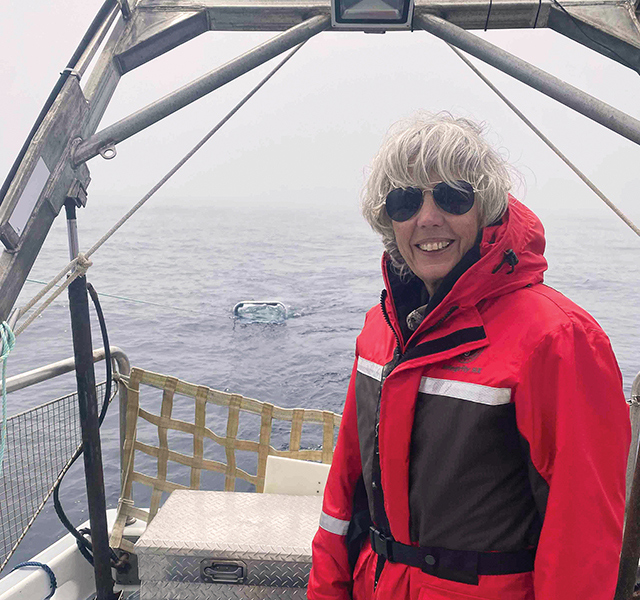
Uta Passow is the Canada Research Chair in Tier 1 Biological Oceanographic Processes at Memorial University and one of the principal investigators in the Northwest Atlantic Biological Carbon Pump project. Biological carbon pump (BCP) is the term given to a group of processes that see carbon taken from the surface of the ocean to the deep ocean, depths below 1,000 metres.
The website for the project explains the process this way: “When tiny algae in the ocean grow, they take up CO2. When some of these algae, or feces from small animals that ate them, sink to the deep ocean … the carbon they contain is removed from contact with the atmosphere for hundreds to thousands of years.” The site said without the biological carbon pump, carbon dioxide concentrations in the atmosphere would nearly double, resulting in a climate that would be “radically different.”
With more and more carbon being produced by humans in recent years, the greenhouse effect results in warmer temperatures. Passow said while much of the carbon has been accumulating in the atmosphere, a significant amount has also been sequestered by the ocean. “People don’t really know how important the ocean is to this whole carbon cycle climate change scenario,” she said.
Passow expects the majority of this carbon will reappear in the atmosphere within the next 100 to 1,000 years. For the time being, the carbon is simply being moved to places where it isn’t increasing the atmospheric concentrations of CO2. “Our grandchildren will encounter most of that carbon, that the ocean currently sequesters, in the atmosphere again,” she wrote in a follow-up email.
Biological carbon pumps exist worldwide, and are stronger in some areas, said Passow. In the Labrador Sea and Northwest Atlantic, she characterizes it as “extremely strong.”
Consider that the North Atlantic Ocean—which includes the Nordic Seas and Arctic Ocean—captures at least 30 per cent of CO2 in the world’s oceans, according to a 2019 paper titled “More efficient North Atlantic carbon pump during the Last Glacial Maximum” that was published in the scientific journal Nature.
The project Passow is working on is trying to better understand how the biological pump in the Labrador Sea works. This is being carried out through experiments, work on ships and autonomous instruments. Every few days, these instruments travel down to depths of up to 2,000 metres and then slowly rise to the surface, taking measurements throughout the process. When they reach the surface, they transmit data to satellites and researchers. The cycle then repeats itself. Passow said the project will take four years to carry out. Canadian researchers are also working with British and German authorities on the project.
Passow said if the ocean stops absorbing so much carbon, more carbon will stay in the atmosphere. “That will mean that all of our predictions of what will happen, how fast the temperature increases and how fast CO2 in the atmosphere increases will go differently than we are assuming right now,” said Passow. “Almost all the models we are working with right now assume the ocean will continue to take up the same fraction of carbon as it has been.” The project is hoping to develop measurements and models to predict how the biological carbon pump will change as the climate warms, as well as develop mediating measures and remedies.
Passow said there’s concern the Northwest Atlantic biological carbon pump could weaken. That’s because the pump includes many tightly linked biological reactions—such as molecular mechanisms and whole ecosystem linkages—that will change as the ocean warms and acidifies due to climate change.
Passow said the only solution that will work long-term is to reduce the rate at which fossil fuels are burned.
A 2019 report by the federal government called “Canada’s Changing Climate Report” notes that increased CO2 emissions not only affect the ocean carbon cycle but ultimately change the “fundamental chemistry” of the ocean. “The ocean has taken up more than a quarter of the CO2 produced by human activities, mainly from fossil fuel burning, since the start of the Industrial Era,” it said. “While this uptake has helped to slow the rate of anthropogenic [human-caused] climate change, it has also resulted in increased acidity of the ocean.”
The North Atlantic Ocean—which includes the Nordic Seas and Arctic Ocean—captures at least 30 percent of CO2 in the world’s oceans.
Increased acidification can have devastating impacts on marine ecosystems. Canada’s Changing Climate Report notes the biggest increases in ocean acidity globally have occurred in the northern North Atlantic, while the smallest increases have been in the subtropical South Pacific. It’s been 66 million years—and possibly 300 million years—since oceans experienced pH changes this rapid, said the report. “These changes can result in seawater having a corrosive effect on shells and skeletons, dissolving them, inhibiting their growth, or causing them to require more energy to grow,” said the report. “Ocean acidification may have many other harmful effects for marine organisms, including increased mortality of young, changes in behaviour, food web changes, reduction in suitable habitat for some species, and increases in harmful algal blooms.”
In a statement, Fisheries and Oceans Canada said that climate change threatens our health, economy, way of life and planet. The department said it’s working with Environment and Climate Change Canada and other partners to better understand the impacts of climate change and put forward a long-term climate strategy for the country. “The work includes conducting scientific research and monitoring activities that inform decisions related to the management of fisheries, oceans and coastal infrastructure management, species conservation, and marine safety,” said the statement.
It noted the federal government is committed to conserving 25 per cent of Canada’s lands and oceans by 2025 and is working toward 30 per cent by 2030. On the ocean side, it’s achieving this through measures such as establishing marine protected areas and marine refuges (closures of fisheries areas). “Marine conservation is an effective nature-based solution that will help stem the tide of global biodiversity loss, mitigate impacts due to climate change, and contribute to the long-term sustainability and resilience of our marine environments,” said the statement.
A 2019 report titled the “Special Report on the Ocean and Cryosphere in a Changing Climate” by the Intergovernmental Panel on Climate Change noted that in many regions, ocean warming has contributed to a decrease in the maximum catch potential for fisheries, on top of the overfishing of some stocks. “In some areas, changing ocean conditions have contributed to the expansion of suitable habitat and/or increases in the abundance of some species,” said the report.
It projects that if steps are taken to mitigate climate, the maximum fisheries catch potential in Atlantic Canada won’t see any change by the end of the century. However, if no steps are taken and a business-as-usual approach is taken, catches are projected to drop between 20 and 30 per cent.
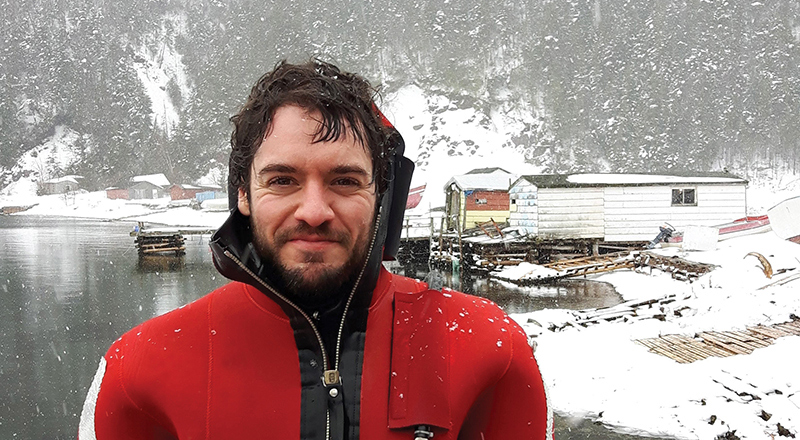
Frédéric Cyr is a research scientist with Fisheries and Oceans Canada. (He also co-wrote the Fisheries and Oceans Canada report cited earlier for iceberg sightings.) Cyr points to lobster as an example of climate change impacts. Warming temperatures are pushing lobster to move north. In recent years, Nova Scotia and Newfoundland have seen increased catch and stock levels. “There’s a range [of temperatures] that fit better for each species,” said Cyr. “Now it’s getting too warm in the Gulf of Maine … so their preferred range has shifted north.”
Besides the impact on the marine ecosystem and icebergs, warming temperatures are causing floods, hurricanes and fires, said Passow. “I think that what is the problem is not the absolute change, but the fact it’s changing so rapidly, and that will get things totally out of whack, all the balances, all of these carefully aligned processes,” she said.
Gow, the co-owner of the Artisan Inn and Twine Loft restaurant, sees some of these changes happening in real time. She said the air blowing off icebergs helps keep temperatures cooler. “It’s almost like sitting next to a refrigerator,” said Gow. However, without icebergs this year, her community of Trinity, Trinity Bay experienced heat in early July that felt like August temperatures. Flowers even bloomed a couple weeks earlier than usual.
Still, Gow believes there’s hope for the future. No one would have ever thought it would be possible to shut the world down, but COVID-19 did that. Gow said we have an opportunity to reset how we do things. “How can we move forward in a smarter way that’s going to be more sustainable for the future?” she asks.
It’s a question whose answer has the power to change the world.
Comment policy
Comments are moderated to ensure thoughtful and respectful conversations. First and last names will appear with each submission; anonymous comments and pseudonyms will not be permitted.
By submitting a comment, you accept that Atlantic Business Magazine has the right to reproduce and publish that comment in whole or in part, in any manner it chooses. Publication of a comment does not constitute endorsement of that comment. We reserve the right to close comments at any time.
Cancel