Account Login
Don't have an account? Create One
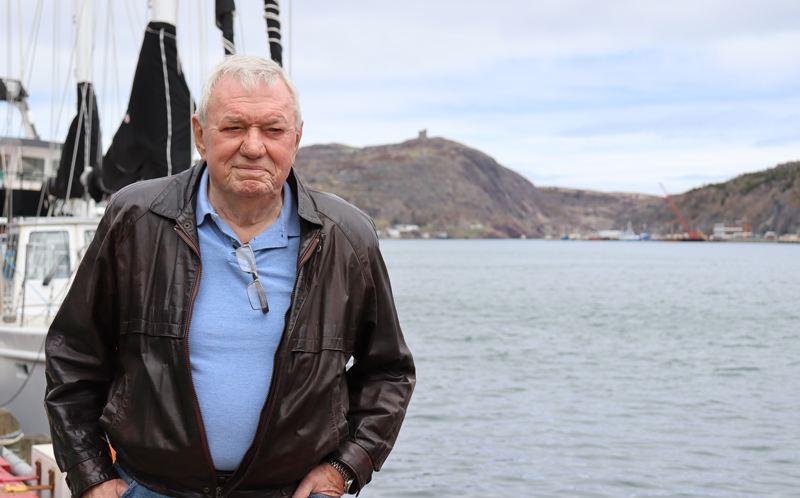
With the annual Energy NL conference beginning today, Captain Dick Spellacy has some plainspoken advice for the folks lobbying to have the Bay du Nord topsides modules manufactured in N.L.: “That’s shortsighted bullshit.”
It’s an opinion that’s sure to provoke a number of Energy NL members.
The Bay du Nord offshore oil field is a series of subsea deposits 500 km northeast of St. John’s in approximately 1,170 metres of water in the Flemish Pass Basin. Earlier this year, CBC-NL reported estimated recoverable oil reserves from Bay du Nord are in the one-billion-barrel range.
If the project proceeds to development, it will be Canada’s first deepwater project; it will also be N.L.’s first new offshore oil project since Hebron started production in November 2017. With the climate crisis pushing an ever-faster green energy agenda, Bay du Nord might possibly be one of the last oil projects developed in Eastern Canada. On the other hand, with project lead Equinor stating it will be one of Canada’s “lowest emitting oil production projects”, it could also be a bellwether for how fossil fuels can co-exist with a green agenda.
While the project cleared federal environmental assessment in 2022, project partners Equinor and BP Canada have not yet given it the green light to proceed. Before that will happen, the partners must first strike a benefits deal with the Governmentof Newfoundland and Labrador.
Not surprising, particularly given the uncertain nature of an oil future, provincial officials are anxious to maximize local benefits while they can—including royalties and construction.
Should Bay du Nord proceed to development, Equinor plans to use a Floating, Production, Storage and Offloading vessel (FPSO) to connect the various discoveries via subsea tiebacks. Last month, Offshore Magazine reported that Equinor Canada had issued a letter of intent (LoI) to KBR Industrial Canada to perform the FEED for the topside facilities for the new FPSO serving the deepwater Bay Du Nord development offshore Newfoundland.
“You want to uproot 300 or more tradespeople and get them to move here for a year when there’s no work here for them after that? That’s not the way to build a sustainable economy.”
Some advocates are lobbying to have the FPSO, and its topside modules, constructed in Newfoundland and Labrador. UA Local 740, for example, has organized a petition calling for the Province to include a local construction mandate in its Bay du Nord negotiations. “Negotiations of previous benefit agreements have set the precedent for work in the province on these types of projects. We ask the provincial government to follow the precedent that has been set.”
Captain Spellacy is all for maximizing local benefits—but says temporary construction jobs aren’t the answer.
Born in England, raised in Australia, Spellacy has lived in Newfoundland and Labrador and been part of its offshore oil development for over 40 years. A Master Mariner—the highest grade of seafarer qualification in the world—Spellacy has spent decades procuring and piloting boats all over the globe. At the time of this interview, he had just returned from what he described as a “stinker of a job”. Supposed to be two weeks, it stretched out to 50 days. “Had to take a rig off a live platform with active burners on each side and three pipelines on one side, and put it on another live platform with active burners.”
In other words, he’s been around the horn and then some. And he speaks with the authority of that expertise when he cautions against short-term construction works. “Look, what are we really talking about here? 300 jobs for a year? You want to uproot 300 or more tradespeople and get them to move here for a year when there’s no work here for them after that? That’s not the way to build a sustainable economy.”
Instead, Spellacy says the province should let the topsides be manufactured elsewhere—”somewhere with an active shipyard, where they can do these things faster, cheaper and frankly, better. In return, the Province should look for a larger share of royalties or some kind of payment that can be used to create a heritage fund, or a development fund. Invest that money into organizations like the Marine Institute or Memorial University. This will lead to more companies like Virtual Marine, Kraken Robotics and Verafin.”
Those companies, he said, are examples of long-term thinking, the type of thinking that would better serve the province than short-term construction projects. “Find a way to invest in the next generation of Kraken or Virtual Marine. Or even infrastructure, like hospitals and roads. God knows we have enough potholes to fill.”
It’s not the first time Spellacy has shared a less-than popular opinion. In the late ‘70s, he gave an interview to The Roughneck, an oil industry magazine that’s been in publication since 1952. At that time, he said that Newfoundlanders were “bloody good seamen” but that their technical training “was shit.”
His comments landed him in front of the entire student and teaching body of the Fisheries College on Parade Street in St. John’s, where he was taken to task for not putting their officers on his ships. They didn’t like what he had to say, or the examples he used to back them up. Today, however, the Marine Institute is producing some of the most technically skilled crews on the planet.
Hard truths are hard to hear. Could Spellacy’s warning about Bay du Nord be one of those truths? Only time will tell.
Comment policy
Comments are moderated to ensure thoughtful and respectful conversations. First and last names will appear with each submission; anonymous comments and pseudonyms will not be permitted.
By submitting a comment, you accept that Atlantic Business Magazine has the right to reproduce and publish that comment in whole or in part, in any manner it chooses. Publication of a comment does not constitute endorsement of that comment. We reserve the right to close comments at any time.
Cancel