Account Login
Don't have an account? Create One
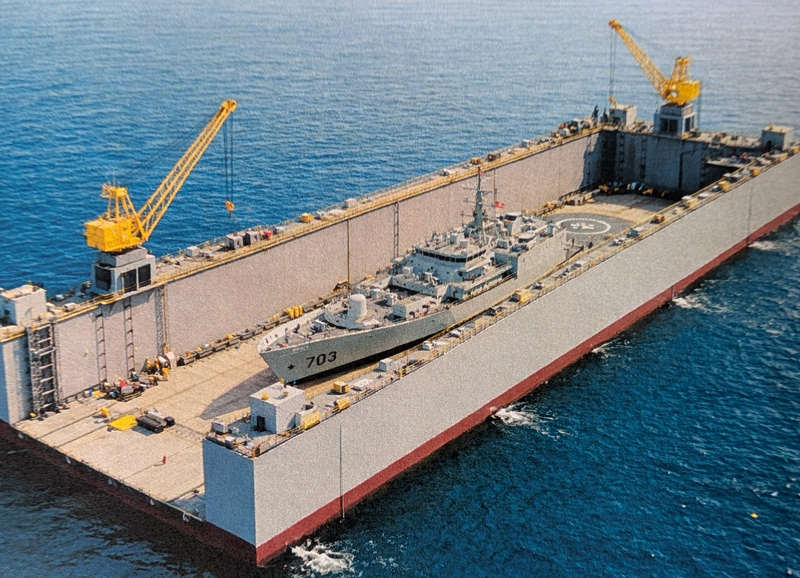
As representatives for the Government of Newfoundland and Labrador, Government of Canada, Equinor and BP announced a benefits agreement for the province for the Bay du Nord offshore oil project, you’d be forgiven for thinking a new floating drydock facility—infrastructure for ship repair, maintenance and largely unmentioned decommissioning work—was a part of the oil project agreement. It wasn’t.
The commitment was a separate decision by the new Progressive Conservative government. It stands as a fresh attempt at government-sponsored industrial development in Newfoundland and Labrador. It’s also a notable financial unknown now, for a province struggling with public finances.
It’s a bold step, for better or worse, and its significance went unrecognized by many given how it was introduced.
Just prior to the Bay du Nord announcement on March 3, “the deal” on benefits was detailed in briefings offered to both reporters and private industry stakeholders (though not Liberal or NDP MHAs, who were not briefed before the announcement). Briefing materials mentioned $200 million for a “fabrication fund” and, on the same page and another following, described the drydock concept, with its planned 18,000-tonne lift capacity, compared to the max 4,000 tonne capacity currently available. The drydock project was mixed into the public speeches on Bay du Nord that followed, with comments televised live provincewide.
Facing reporters, Premier Tony Wakeham spent time talking about expectations for “the creation of an industry” with the new floating industrial facility.
The interlocking of the Bay du Nord benefits and the drydock has continued. In an interview just this week, Wakeham was asked what was in the Bay du Nord agreement and described it as “a rather unique agreement” that “will also see Equinor contributing to the start of a new industry in Newfoundland and Labrador, and that’s the building of a floating drydock, which will create an industry that will live on.”
Atlantic Business Magazine was told a copy of the actual text of the Bay du Nord benefits agreement is going to be made available. It hasn’t been yet. In the meantime, Atlantic Business Magazine confirmed the decision to dedicate the $200 million from Bay du Nord (should it proceed) as a starter payment on the drydock was an independent decision of government. The drydock is not explicitly mentioned in the agreement.
“It’s a fabrication fund (in the agreement). Obviously, the conversation at the table was around the whole idea of the concept of a floating drydock but in the benefits agreement it’s a fabrication fund,” said Energy Minister Lloyd Parrott, in interview.
The premier had no real idea of the actual cost and risk to the province, as he publicly made the commitment to build what he said would be the largest floating drydock in Eastern Canada. Reported, rough estimates have referenced the fact the development will cost more than the $200 million from the oil project, with references to additional costs in the “hundreds of millions.”
One source of these “early phase estimates” is the media briefing just prior to the Bay du Nord announcement. What was said in the briefing can’t be quoted directly but officials acknowledged the project will cost more. The possible total cost was offered in rough comparison, citing similar projects in other parts of the world.
In response to questions, Atlantic Business Magazine was told by the energy minister the government has a “concept level” or “magnitude cost” of $425 million, plus or minus 25 per cent. It’s not clear yet how that figure was established, if it is specific to place, or addresses any work required for the new industry apart from the floating infrastructure. It’s not the kind of estimate private industry would use to green light project spending, with so little engineering completed.
“We’re going to spend whatever is necessary to make this (ship maintenance and decommissioning) industry work in Newfoundland and Labrador. And we will look for strategic partners along the way,” Wakeham said at the Bay du Nord event.
There are a lot of things the province might spend $200 million on. So, where did the drydock project come from? Why commit without caveat?
No one has named a name for who first put the project on the table. The idea, as described to date, “coalesced,” or generally emerged from conversations between bureaucrats, private industry, government members provincial and federal. Neither names nor clarity were provided as to who made the suggestion and then who drove the bus in making it a firm commitment. Atlantic Business Magazine was told more than once, by government staff and members, the exact origin of the idea is not really important.
After some investigation, it’s not clear everyone promoting the idea even knows its origin, or at least thinks it worth detailing. Descriptions have been slightly different one to the next. Responses on the subject instead tend to focus on potential partnerships that will help cover the full costs of the drydock and expected benefits from the infrastructure.
On announcement day, the premier said: “…it was so important to us to say, well, we need guarantees for jobs. That’s when we started to talk about the art of the possible here and the other things we could get. And of course at the same time the federal government was talking about a national defence strategy, so then we switched our focus to say, ‘Ok, what is it that we can do differently that can create long-term, permanent jobs for the workers of Newfoundland and Labrador?’”
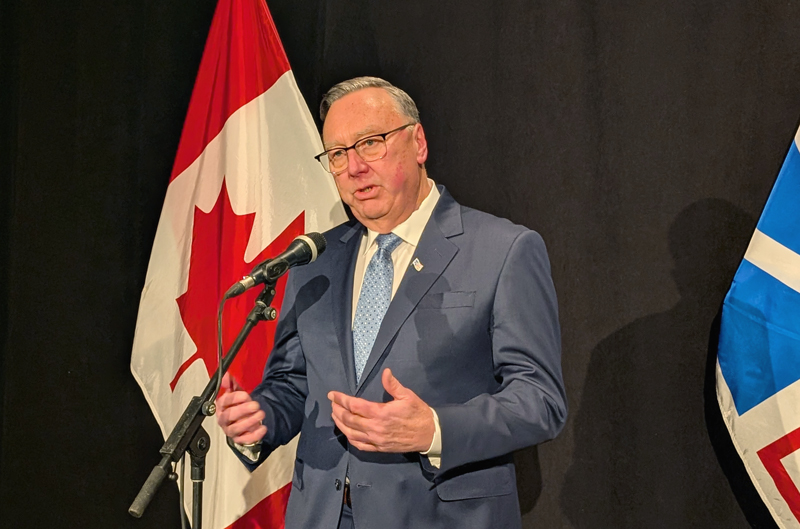
But why specifically a floating drydock for large ships? Who put it forward? When?
Energy Minister Lloyd Parrott has separately mentioned, “conversations with defence partners and companies from all over the world who were coming to, not just tour the Bull Arm (fabrication) facility but different marine facilities around the province,” but attributes the drydock ultimately to a vaguer idea of “a lightbulb going off.” There’s no mention of who had the lightbulb.
“Listen, it was a whole lot of different people. Talks in Ottawa right down to here. OilCo was involved in the process. And then we seen the opportunity collectively as a government and industry. I mean, we consulted with industry stakeholders. And it’s where we landed and it was a long process to get there,” he said in interview.
OilCo played a role. The Bull Arm Fabrication Facility is on the corporation’s books. The facility was up for a long-term, 30-year lease to private industry. On the same day as the Bay du Nord benefits announcement, reporters were told that was off. The province would be keeping the asset and using it, in part, for construction of the drydock facility, and working with the private industry players to hopefully still see needs met. As well, representatives from OilCo had taken part in conferences and meetings with content relating to federal defence spending.
The Government of Newfoundland and Labrador is not currently in the ship repair, maintenance or decommissioning business. It has vessels like ferries but they are contracted out for repairs. Despite the lack of direct experience in the industry, members have still made very strong statements as to the ability to handle the project, the strength of the proposed business and activity expected. The remarks seem to have been built on private briefings, discussions with OilCo leadership and an engineering study commissioned, informing decisions and the public reveal of the project plan. Atlantic Business Magazine has requested a copy of the consultant engineering report mentioned, also filing through Access to Information for it and anything else that might shine more light on the drydock commitment.
Atlantic Business Magazine was also directed to publicly available documents, including a 2024 report on the Evaluation of Fleet Procurement and Maintenance for the Canadian Coast Guard and Department of Fisheries and Oceans. It refers to Canada’s aging fleets: naval vessels, icebreakers, patrol vessels, science vessels. The status of the ships points to a coming need for, among other things, decommissioning work.
“Across the Canadian Coast Guard fleet, 30 per cent of vessels have less than five years left until they reach their end of service life (EOSL) (…) As of 2023, the large fleet has reached 82 per cent of its intended service life,” the report states, clearly laying out a concern at the federal level seen as an opportunity for the province.
There’s mention in the report of “shipyard delays” affecting the flow of required work, in what could be a nod to available capacity. However, the report also points to risks existing in the business. It states challenges cited post-2010 for shipyards trying to add to their existing capacity. They include: “workforce attraction and retention, supply chain issues, volatility in commodity prices, and increasing costs for parts and equipment.”
It’s unclear to what degree the available labour and skilled trades in Newfoundland and Labrador match up to the demands in the planned ship business. That said, TradesNL executive director Bob Fiander has fully endorsed the plan for the drydock, saying availability of skilled labour won’t be an issue in building the facility.
Regardless of possible challenges, the business being promoted by the Government of Newfoundland and Labrador has seemingly been a conversation among the premiers before being made public. In an interview in early February on CBC’s Power and Politics wherein she was speaking about federal defence spending and the defence industrial strategy, for the Atlantic provinces, New Brunswick premier Susan Holt mentioned capacity available in “the shipbuilding they do in Halifax, the incredible aerospace sector they’ve built over in P.E.I.,” and, “we’ve got a decommissioning capacity that’s been built up in Newfoundland.”
For the province, were any other options considered for a $200 million benefit from the Bay du Nord oil project?
If there were any specific alternatives weighed, no one’s mentioning them. They’ll repeat the expected benefits from the drydock facility.
“When we went with the floating drydock, it was the whole idea of finding long-term sustainable work for people, it was the whole idea of revitalizing and creating a new industry. We were very clear in our Blue Book in our platform that was what we were going to do as a government. And this presented the best opportunity,” Parrott told Atlantic Business Magazine.
“It wasn’t a dart thrown at the wall so to speak,” he said.
Parrott highlights what is a key element in all of this: the government’s repeatedly mentioned expectation for partnerships. That’s both in covering infrastructure cost, for the drydock build and related work required wherever it may be used, and when it comes to the business model underlying the facility’s operation.
“I mean right now we’re working with consultants and OilCo is taking the lead on that. And you know, when those studies come back, we’ll determine whatever the optimal operating model is for the floating drydock. The reality right now is it’s too early to say what that model is exactly going to look like. (…) But once we get these studies back and we understand what they mean then we’ll look at every opportunity,” he said.
“And to me, to be frank, we’re open to all opportunities. Every possibility is on the table here with this,” he told Atlantic Business Magazine.
But why would the premier and Energy minister already be out committing so fervently to the drydock? Why announce it the way they did?
“This is an important announcement in the fact that it’s a signal that we are moving things forward. We’ve said that we’re going to be building ferries here in the province for the future, we’ve said that we’re looking to long-term work for the province and this sends that signal,” Parrott said.
“The reality is OilCo engaged a local (engineering) company with significant expertise in shipbuilding in the marine industry and they completed a concept level assessment for us (the study previously mentioned) and the assessment included market research on the cost of, you know, a floating drydock this size and we used the information in a negotiation process to establish a fabrication fund. We’re happy where we landed. And we will actively be looking for other partners to move this forward and we’re quite certain we’ll get those partners.”
There was suggestion from Parrott the existing players in the industry could not have gone out and proposed the floating drydock facility, not one at the scale planned, on their own. As the suggestion goes, they couldn’t have led the project and sought government support. It left no choice but for the province to take the bull by the horns.
At this point, the chosen project and chosen approach means the province will dedicate the first public funds to the floating drydock under the next provincial budget for front end engineering and design (FEED) work. Cost estimates of any real accuracy can only come through such work.
Regardless of the premier’s all-in comments, it’s a standing question if the development will proceed if costs are outside expectations or the Bay du Nord project doesn’t go ahead, as the province would not have $200 million to help against the final, total costs.
Parrott said he gets cynicism in response to what’s been announced. But he believes the current government is setting the province on course to establishing business activity capable of standing independent of the commodities boom and bust.
Similar articles:
Comment policy
Comments are moderated to ensure thoughtful and respectful conversations. First and last names will appear with each submission; anonymous comments and pseudonyms will not be permitted.
By submitting a comment, you accept that Atlantic Business Magazine has the right to reproduce and publish that comment in whole or in part, in any manner it chooses. Publication of a comment does not constitute endorsement of that comment. We reserve the right to close comments at any time.
Cancel