Account Login
Don't have an account? Create One
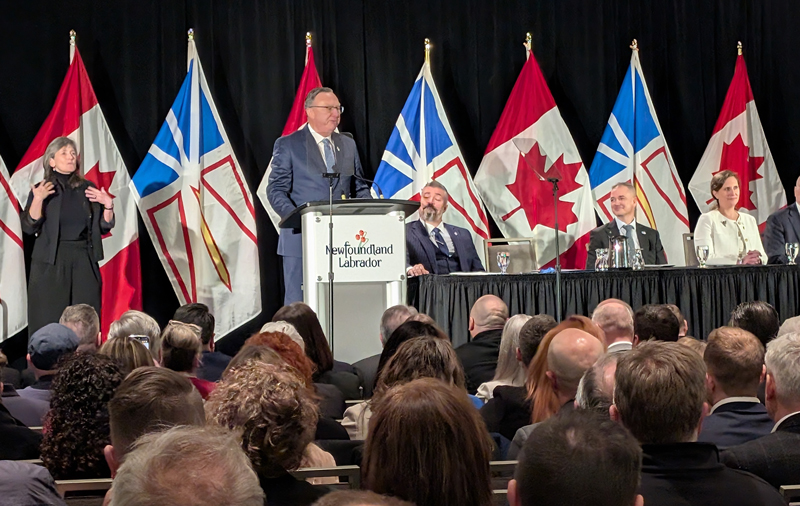
The Bay du Nord offshore oil project took a step forward with the signing of a benefits agreement for the Province of Newfoundland and Labrador, at the Delta Hotel and Conference Centre in St. John’s on Tuesday evening.
“Others have been talking about Bay du Nord for over a decade. Well, I think we have been talking long enough. It’s time to start doing something about it,” Premier Tony Wakeham told the gathering of about 400 people, as well as an audience amplified by live coverage of the speech online and on radio and supper-hour news programs.
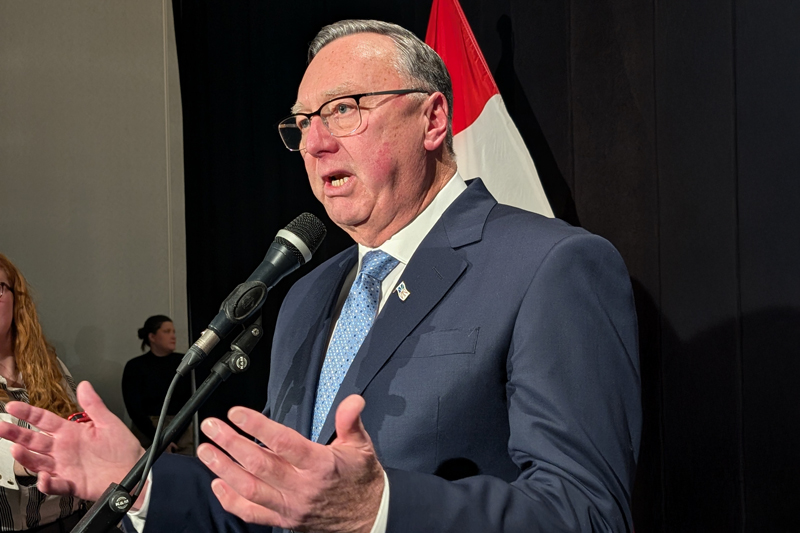
Wakeham proceeded to offer highlights of the new agreement, one the province says offers:
The provincial government has also negotiated an option to take up to a 10% equity stake in the Bay du Nord project. It’s expected the government will make a decision on that by late fall — both if it will be pursued and how they would finance the cost of the direct stake.

The new benefits agreement supercedes a “framework agreement” on benefits, what officials are calling an “informal agreement,” announced in 2018. Comparatively, it covers an estimated 430 million barrels in oil production, versus 300 million barrels cited in the earlier announcement.
The main difference between the Bay du Nord agreement and previous offshore benefits deals is it is a “life of field” arrangement. It’s a first for the province and means further deals for any additional benefits will not be signed in the event of project extensions beyond this Phase 1 development, with certain requirements like apprenticeship targets simply extending to the extensions. Summary documents suggest an expected $26.9 billion in spending by proponents over the life of the oil field, versus a $10.9 billion total figure mentioned for the 2018 arrangement.
Bay du Nord isn’t guaranteed to be developed at this point, though proponents say the announcement this week brings it much closer. A sanction decision – the ultimate go or no on investment – is expected in the first quarter of next year. If it proceeds, project partners target first oil in 2031.
The proposed oil development is located in the Flemish Pass Basin, an offshore area about 500 kilometres northeast of St. John’s. It would see Canada drilling further from land than any country in the world. There are currently no other projects in the Flemish Pass. By comparison, Newfoundland and Labrador’s existing offshore oil projects in the Jeanne d’Arc Basin are roughly 300 to 350 kilometres from shore, depending on the site.
The drilling targets for Bay du Nord will begin at depths ranging from 600 to 1,170 metres, compared to far shallower water depths for existing projects. The Hibernia project has drilled, as an example, at about 80 metres depth. Bay du Nord marks the first deepwater development for offshore Newfoundland and Labrador.
The project cleared environmental assessment in April 2022.
Equinor currently holds a 60 per cent stake in Bay du Nord, while BP holds 40 per cent. It will be Equinor’s first project at the helm as an operator through development in the Canadian offshore, though the company has a stake in other projects in the region and has already led extensive early exploration and drilling work required to reach this stage for Bay du Nord.
Equinor’s country director for Canada Tore Løseth said he appreciated the “full court press” in St. John’s for the benefits agreement signing. He said what is now signed reflects “many months of focused work and honest conversations.”
“The discussions have been, yes, thorough and at times challenging. As it should be,” he said.
He also told reporters the company has stuck with the project through many hurdles to date — including a pause and re-configuration given costs and market conditions in 2013 — for the significant resource available but also, at least in part, because it offers an opportunity for Equinor to use and extend its expertise in deepwater offshore work.
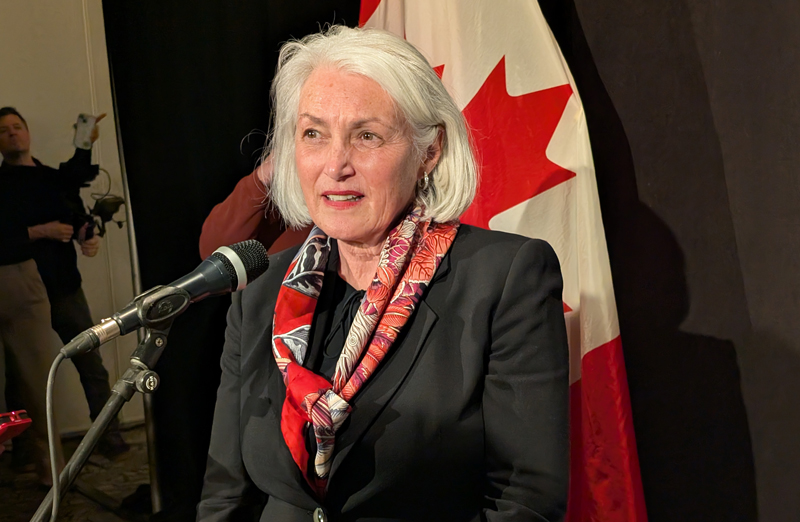
The Government of Canada stepped in with a significant assist for the project, agreeing to shoulder the country’s responsibilities as they arise under the United Nations Convention on the Law of the Sea (UNCLOS). Given Bay du Nord reaches beyond 200 miles out and Canada’s exclusive control, into international waters, the international convention is expected to apply, requiring payments to the International Seabed Authority for international redistribution of some of the financial benefits.
Wakeham said, in his own meetings with Prime Minister Mark Carney and others in government in Ottawa since his being named premier, there was expression of a willingness to address the UNCLOS requirements, and “full marks to them for doing that.” Reporters were told a letter was sent to the project proponents and provincial government confirming they would not be left to face related costs. Officials were loath to say any particular date when the letter was received. It was not publicly released or mentioned prior. The suggestion is it effectively amounts to an estimated $1 billion in tax relief for the development.
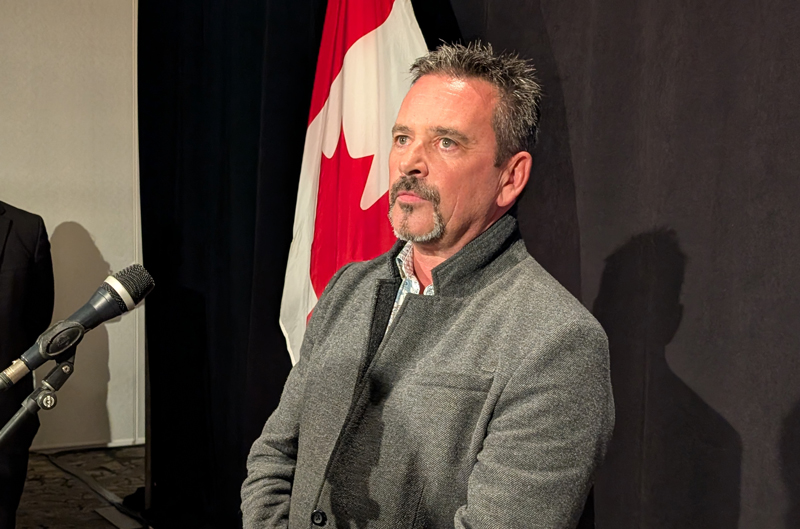
Bay du Nord relies on installation of subsea infrastructure and use of a specialized floating, production, storage and offloading vessel (FPSO), as opposed to a fixed platform in the style of the Hibernia or Hebron developments already in production. Work on the “topsides” of the FPSO isn’t guaranteed for local builders under the benefits agreement, though companies can try for the contracts on a competitive basis. An expression of interest call has already been out.
Wakeham and the Progressive Conservatives did make a commitment during a fall general election campaign to see the majority of topsides work completed in the province. Opposition Liberal MHA and energy critic Fred Hutton responded on the heels of the benefits announcement by, among other things, highlighting the broken campaign promise.
“It’s not what they promised during the campaign,” Hutton said, making the point the Liberals, while in government, also fought for the project through a contentious period of environmental review and decision making at the federal level.
The response to the issue of the campaign promise is the signed arrangement secures the vast majority (95 per cent) of work on subsea components of the project. There is also the plan to apply the $200 million “Fabrication Fund” to a separate project for the province, in the construction of a floating drydock. The idea is to use the drydock asset to leverage long-term work in ship maintenance and repair, including potential work in the Defence sector serving larger Canadian Coast Guard and naval assets.
For his part, TradesNL executive director Bob Fiander was happy enough with where things landed, even if the election commitment didn’t come through. That’s particularly with the dry dock expected to be built at the Bull Arm Fabrication Site. The facilities there are to be retained by the province (specifically its oil and gas corporation) and not sold as previously planned.
“Do we want some of that type of (ship) work that Halifax is enjoying? Absolutely, ” he said.
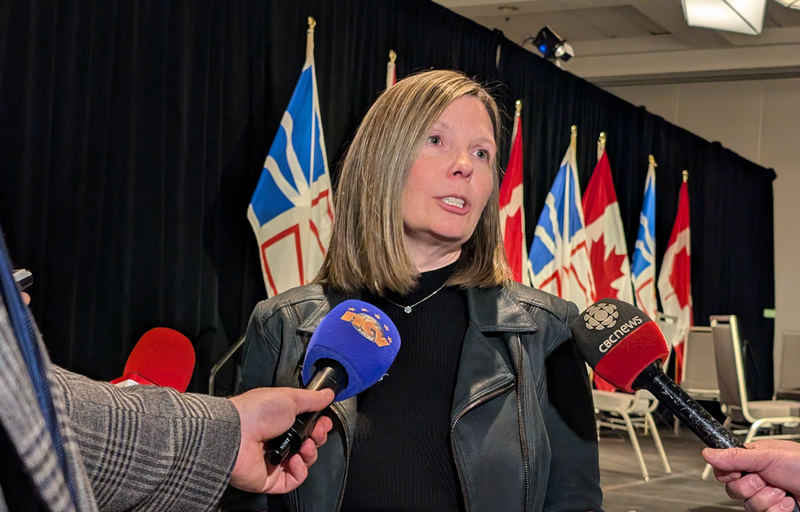
The Progressive Conservative leadership in the province did make it a partisan event. Opposition politicians were not so much as offered a briefing, though select business stakeholders were, prior to the announcement being made. It’s not new for the province to have politicized major project events.
Regardless, Independent MHA Eddie Joyce reflected a largely enthusiastic reception to the news of progress on Bay du Nord amongst those in attendance from across the spectrum.
“Three years ago, they said this project was stopped. Now it’s moving ahead. With opportunity for all the trade workers, a lot of newcomers that’s going to be into the workforce through the apprenticeship program… So right now, it is a great announcement to move this forward,” he told Atlantic Business Magazine.
For Bay du Nord, there will be contracts not just in the fabrication of subsea elements and construction but also in engineering, legal, human resources, materials supply, offshore support… the list is long. Notably, with the already existing activity in St. John’s harbour, it’s expected another local community and harbour will be developed as a service centre for the Flemish Pass developments.
Representing local companies interested in bidding the emerging offshore work, EnergyNL CEO Charlene Johnson said the news of progress comes at a good time.
“We have a supply chain that has worked in the oil sector for decades. They’re ready. They’re ready for the planning of this, they’re ready for the construction of this, they’re ready for the operation of this. And not only are they ready for Bay du Nord, but they’re ready for the buildout of Bay du Nord, the tie-backs, they’re ready for the projects to follow, new basins to open, new exploration. It’s been a long time we’ve been in a lull and that all changed today,” she said.
There was little mention of it at the event this week, yet the Canada-Newfoundland and Labrador Offshore Energy Board (CNLOEB), the offshore regulator, is expected to do a separate piece of work reviewing the project prior to any sanction decision. It does give interested parties — with environmental concerns, safety concerns, concerns over financial cost and benefits — a chance to seek some kind of further response to specific concerns.
At the time of the Hebron project, the “public review” was carried out under an independent panel led by retired publisher Miller Ayre. The many, detailed Hebron Public Review Commission submissions were not maintained online, despite requests, though the final report is still available at a click. At the time of that review, as an example, union representatives for offshore workers spoke to concerns around safety in transportation and transportation options, on the heels of the loss of lives in the crash of Cougar 491.
There are options open to the regulator on how they want to proceed in terms of the public review work. The Board may opt for a different process versus the public hearings held for Hebron. It could shorten the review period. As reported in the latest print issue of Atlantic Business Magazine, available now, the Board has said there will be more released on the review process following the submission of a development application by Equinor and its partners. The public review is expected before the sanction decision next year.
Similar articles:
Comment policy
Comments are moderated to ensure thoughtful and respectful conversations. First and last names will appear with each submission; anonymous comments and pseudonyms will not be permitted.
By submitting a comment, you accept that Atlantic Business Magazine has the right to reproduce and publish that comment in whole or in part, in any manner it chooses. Publication of a comment does not constitute endorsement of that comment. We reserve the right to close comments at any time.
Cancel