Account Login
Don't have an account? Create One

For professionals coming from other countries, Atlantic Canada can be a bit jarring at times. Taking a beat to consider what newcomers face, then simple steps to ward off common stressors, can go a long way to helping these new business partners and employees make the choice to stay, says author Didan Ashanta Wedderburn.
It’s food for thought in a part of Canada where provinces are struggling to improve the one and five-year retention rate on new arrivals. The last available from Statistics Canada shows Prince Edward Island and Newfoundland and Labrador commonly failing to keep even half of their new arrivals after five years, while New Brunswick and Nova Scotia have ranged between 50% and 65% retention.
“We have a big issue with retention. We get the best of the best from the rest of the world and they all come here with big dreams and high hopes but social isolation is a big issue, cultural fatigue is a big issue and financial insecurity a big issue,” Wedderburn said in a recent interview.
“People who work alongside or hire foreign-born residents, foreign-born professionals need to be conscious that it’s not just the typical checklist of oh, they have their paperwork, they know where the bank is, they know how to take the bus, that sort of thing. We have to recognize that there’s a whole lot more going on in terms of that person reconstructing their identity,” she said.
That doesn’t mean a business needs an entire department dedicated to employee support programs. It can come down to small steps and leadership; something as simple as assuring there’s someone in the office, not the boss or manager, who can be a touchpoint for people when questions arise. Similarly, it helps to proactively mention those common pieces of daily, local life.
As an example from the Atlantic Canadian winter season, Wedderburn mentions snow clearing. Offering up some tips related to snow clearing as it specifically happens in this region, with its penchant for heavy snow dumps, wet snow mixed with rain, can be a form of welcoming that’s also practical. And it’s related to that burden of the ongoing adaptation to local culture.
“It’s important they understand the process of acculturation that their employees are going through and beginning to provide them the resources, explaining certain things like why is my elementary school teacher sending my kid home with a list of names for Valentine’s Day? You might take it for granted, but in other cultures Valentine’s is not a kids thing. And it’s these trivial things that cause the cultural fatigue, that cause the employee to come into work a little bit distracted or overwhelmed because they’re trying to figure out all these cultural norms that are foreign and strange to them,” she said.
She said the best bosses and colleagues are the ones who don’t assume people already know.
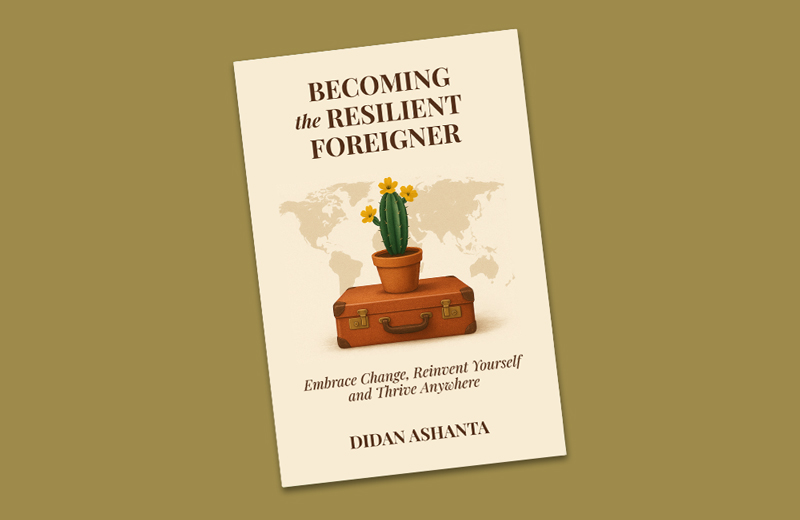
Wedderburn was speaking with Atlantic Business Magazine following release of her book Becoming the Resilient Foreigner: Embrace Change, Reinvent Yourself and Thrive Anywhere. Just as she does each day, the book spends time in direct conversation with people hoping to thrive after their move to a new country, who find themselves frustrated or struggling. She offers practical tips that can double as a kind of guide for employers and colleagues who are looking for ways to be supportive.
The recommendations and thoughts offered in the book come in part from Wedderburn’s own experiences. When introducing herself, she laughs and says she loves islands. Born in Jamaica, she spent eight years living in Japan and has overall spent more than 20 years as a self-described “foreigner,” living and working around the world.
She acknowledges “foreigner” is sometimes deemed as carrying negative connotations. However, she said, she and other professionals do choose it for self-reference, preferring it to things like “expat” or “immigrant.” That self-description is worth respecting.
Her time in Japan was focused on work as an English as a Second Language (ESL) educator. That work, in both private and public schools, inspired an interest in development of ESL textbooks and curricula.
It was based on her time in Japan, in January 2020, when an administrator of a Facebook group focused on Jamaicans living in Japan asked Wedderburn if she might respond to messages and maybe even do a seminar with advice on the personal trials of living and working abroad.
Many more conversations and contacts followed.
Wedderburn then moved to St. John’s, Newfoundland and Labrador, pursuing a Master of Education. Hearing from international students here, she was inspired to delve further into some of the existing research—in sociology, psychology—related to international ESL workers, and generally people working outside of the countries of their birth.
She said she felt a lot of the material offered directly spoke about how to fit into society, to learn the rules. It was harder to find things she might offer to people on their personal feelings, on how to build that sense of belonging and come to feel settled. And so she began work on her book.
The text encourages self-reflection and includes prompts, asking people to think about their goals, challenges and opportunities. It promotes thought to professional and personal development. And it weaves Wedderburn’s personal experiences throughout.
“I really want them to know the struggles that they’re going through are not because they are broken. (…) This is the journey all people take when they relocate. So it’s just to be kind to themselves, but understanding that and making sure once you realize you’re not the problem then you will feel braver to go to someone and say, ‘Hey, I’m struggling with this,’ or ‘How are you navigating that?,’ whether that is another foreigner or it is a local,” she said.
About Our Book Report Series
In Book Report, Atlantic Business Magazine highlights non-fiction focused on Atlantic Canada and Atlantic Canadians, and from Atlantic Canadian publishers. These pieces offer details from upcoming business biographies, Q&As on new releases and in some cases fresh commentary from non-fiction authors on the subjects of their published works.
Similar articles:
Comment policy
Comments are moderated to ensure thoughtful and respectful conversations. First and last names will appear with each submission; anonymous comments and pseudonyms will not be permitted.
By submitting a comment, you accept that Atlantic Business Magazine has the right to reproduce and publish that comment in whole or in part, in any manner it chooses. Publication of a comment does not constitute endorsement of that comment. We reserve the right to close comments at any time.
Cancel
Wonderful article. Very insightful and the work Didan Wedderburn does is very commendable.