Account Login
Don't have an account? Create One
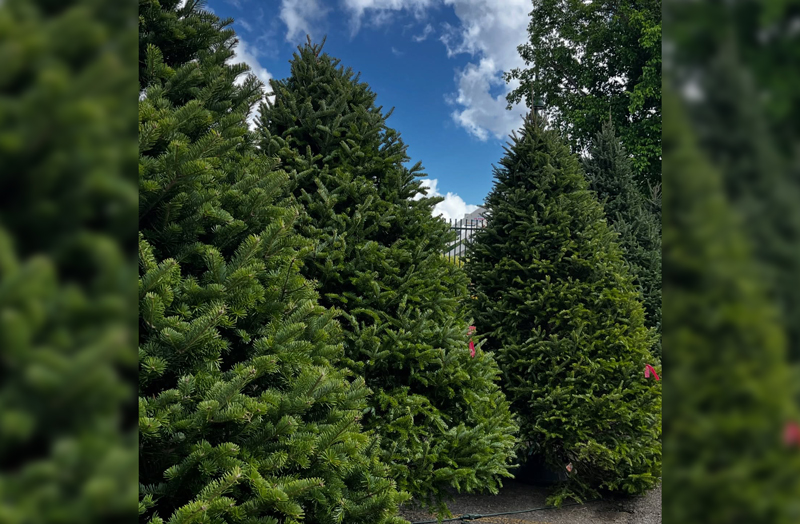
Nova Scotia’s balsam fir trees are a holiday staple in homes throughout Canada and the United States. They’re also shipped every year to retailers around the world. And while growers are managing through the ongoing challenges at home, not least of all a changing climate and new environmental threats, they’ve still managed to foster these overseas markets.
International exports beyond the mainland United States are not the top market for any of the tree growers. In 2023, Canada as a whole exported over two million Christmas trees. According to Statistics Canada, 96.5 per cent were to end up in the U.S.
Even so, Christmas Tree Council of Nova Scotia president Mike Harlow estimates a slightly lesser share of the province’s international market is in the United States, at closer to 80 per cent. For the rest of sales, growers look to opportunities beyond. And while numbers aren’t exploding, the markets have the potential to become even more important in the years ahead.
Through the years, Nova Scotia trees have stood as centrepieces to winter festivities in rural Japan, for example, as the CBC colourfully reported in 2016. The industry made significant inroads for sales for homes in Panama. The Council says the trees from Nova Scotia have also been seen in a long list of other countries, from Thailand to Ireland to Namibia. Of late, warmer climes to the South have stood out in terms of sustained and new interest.
Around the industry for half a century, Harlow is also chair of the All Nova Scotia Green Christmas Tree Co-op, based in New Germany, in Lunenburg County. That co-op includes 23 growers, of which he is one, and they collectively ship into the Caribbean.

He said this is the first year for local trees landing on the island of Saint Barthélemy, just South of Puerto Rico, more popularly known as St. Barts. The island has commonly shipped in trees from Europe in the past, particularly France.
“We sold through our co-operative … we sold a container load of trees and we helped source tree stands so they could irrigate their trees,” he said, proud of not just the tree delivery of about 630 Canadian trees but also the details around improving handling for local retailers for longevity.
While his term as Christmas Tree Council of Nova Scotia president will wrap up this coming June, Harlow sees the existing and potential, new overseas markets as important to the overall picture for growers going forward.
“I’m confident we will secure more next year as well,” he said.
It’s still associated with the U.S., but the unincorporated and self-governing territory of Puerto Rico has been a destination for even more trees from his co-op for at least 15 years. There has been an evolution through those years, he suggested, with a focus on seeing trees are arriving and selling in the highest-quality condition.
“We start cutting trees generally the start of the last week of October and the first load generally goes out for shipment on a Friday, the last Friday of the month, and the vessel sails on Monday to Puerto Rico. Then the subsequent orders … would follow each consecutive Friday,” he explained, when asked about the time management and logistics.
The trees this year were packed with bags of ice while in containers. And, increasingly, local retailers will not just keep trees watered and under cover, but shift them into chillers, to keep them out of midday heat reaching over 30 degrees Celsius at times.

Despite all the challenges, people still line up at retailer locations for Nova Scotia trees.
“I’ve been there when the first load was released from the port and was announced to the several hundred people lined up at the tree selling facility … People started dancing, out in a sunny day,” Harlow recalled.
Atlantic Business Magazine was told Guaynabo City Christmas Trees worked with Harlow’s co-op this year. Social media posts show well-shaded trees and even a tree secured atop a car and ready to go, while green grass and palms are visible in the background.
Looking historically, there are records of trees being shipped from Nova Scotia dating back to 1915, with shipments sailing into the American market by the early 1920s. The approach to growing trees has consistently matured from then to now. From fertilizers to the processes used to ready trees for market, there is little in the industry today that matches the nascent industry a century ago, save for the passion of growers for the work, some on longstanding family-owned farms.
Major changes have come through experimentation, learning by doing, but also through research. A focus most recently is work on genetics, to make trees more resilient in the face of climate change.
“There’s some wonderful genetics that we’re working with now for trees retaining needles … the colour and the longevity of the tree after its cut are really what the industry is looking for,” Harlow said.
This year, tree farmers throughout Nova Scotia were threatened by the dry summer and wildfires, fueled by climate change. Harlow said trees for international shipments were given a big help with a few heavy rains just ahead of harvest, but climate resilience is top of mind for all.
As of the 2021 Census of Agriculture, the last comprehensive count, there were 1,364 farms in all of Canada with Christmas trees for sale, 213 of those farms were in Nova Scotia. The census is taken only every five years.
Similar articles:
Comment policy
Comments are moderated to ensure thoughtful and respectful conversations. First and last names will appear with each submission; anonymous comments and pseudonyms will not be permitted.
By submitting a comment, you accept that Atlantic Business Magazine has the right to reproduce and publish that comment in whole or in part, in any manner it chooses. Publication of a comment does not constitute endorsement of that comment. We reserve the right to close comments at any time.
Cancel