Account Login
Don't have an account? Create One
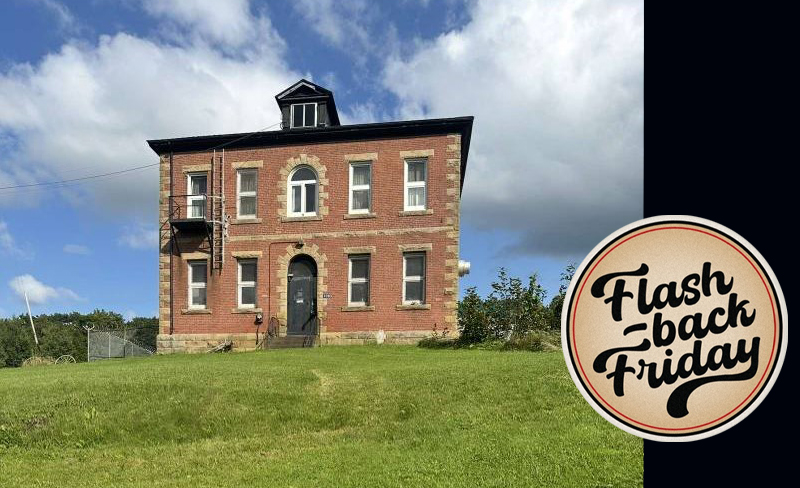
A ring of large metal keys opens a steel-barred door into a small, two-metre by three-metre room with peculiar artwork scratched into its concrete walls. Inside is a small cot and a toilet bowl built into a wooden box with a hinged lid (which is, thankfully, now just for decoration). Instead of serving a sentence in cells at Dorchester Jail, guests now stay there by choice. The history of the former prison dates back over 150 years, and the property is now a residential home and bed and breakfast.
Dorchester Jail first opened in 1875 in Dorchester, New Brunswick. Initially, the facilities served as a federal prison, before becoming a provincial jail in 1880 (likely due to the opening of Dorchester Penitentiary that same year).
On the building’s ground level, there was a section known as the ‘light side’ that held prisoners who committed non-violent crimes. The six cells held two prisoners each, where they spent 20 hours a day, with the rest of their time split between outdoors and the common area with showers, seating and phone use. Another portion, known as the ‘dark side’, held more serious offenders who committed major violent crimes. Each cell was single-occupancy, and the area presumably got its name for the lack of lighting; the only light prisoners saw was natural light through the area’s small windows.
Upstairs, there were the warden’s quarters, where the jail master lived with his family. A window from their space looked into a large holding area for short-term, minor offenders that could hold up to 30 men in 15 bunk beds. For about 40 years, Dorchester Jail was a men’s and women’s prison; a large room on this level held up to eight female prisoners at a time. This floor also had a death row area, with two cells where prisoners spent their last 30 days.
Dorchester Jail operated as a prison until it closed in 1998. In 2000, the province put the jail up for auction, and it was purchased by a local entrepreneur who lived in the building for years and later converted a large space upstairs into a gym. Everything else in the building was locked, so members could only access the fitness space.
Over 15 years later, after a lifetime of working for the City of Toronto, Bill Steele was looking for a unique place to retire and discovered Dorchester Jail through online classifieds. He monitored the listing and eventually purchased the property and moved to the Maritimes in 2017.
Steele and his partner, Natasha March, transformed the jail into their home and a bed and breakfast. Their family lives in the warden’s quarters, and some jail cells are available for rent, plus part of the female prisoners’ quarters, which was converted into a more conventional room for those who don’t want to sleep in a jail cell.
The building has upgraded electricity and plumbing; guests have access to proper washrooms and aren’t locked in their cells. However, the family made efforts to maintain as much of the property as possible, including artwork sketched into cell walls by prisoners. Known for its paranormal activity, staying at Dorchester Jail isn’t for the faint of heart. Tours of the property are available year-round, and those looking for a unique experience can spend the night.
Note: A representative of Dorchester Jail was unavailable for an interview; the above article is based on third-party research.
More Flashback Fridays:
Comment policy
Comments are moderated to ensure thoughtful and respectful conversations. First and last names will appear with each submission; anonymous comments and pseudonyms will not be permitted.
By submitting a comment, you accept that Atlantic Business Magazine has the right to reproduce and publish that comment in whole or in part, in any manner it chooses. Publication of a comment does not constitute endorsement of that comment. We reserve the right to close comments at any time.
Cancel