Account Login
Don't have an account? Create One
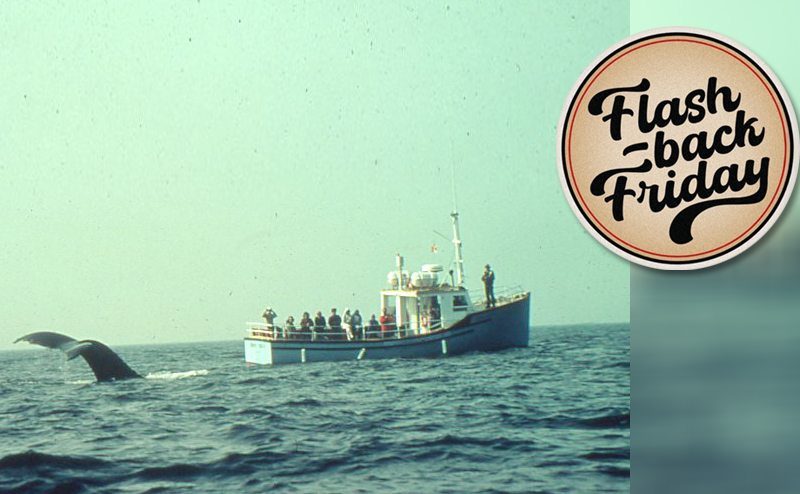
Providing unique educational sea adventures on the Bay of Fundy, the beginning of Brier Island Whale and Seabird Cruises dates back over 40 years. Having started as a research project, the whale-watching business has since evolved into a unique social enterprise that supports future exploration. Now the longest-running whale watching operation in southwestern Nova Scotia, the organisation continues to collect data and photographs on every tour.
It all started in 1984 when a group of researchers travelled to Brier Island, Nova Scotia, to investigate the presence of whales in the Bay of Fundy. When Gale McCullough, her son Cary and Carl Haycock arrived, they recruited local fisherman Harold Graham to take them on his boat to see the whales. The group successfully collected photos and data for their research, and Haycock returned the following year. After some discussion, Haycock and Graham decided to start their own whale-watching business and use a percentage of the revenue to fund research.
Graham secured a loan for modifying his lobster fishing boat for tours and other start-up costs, and the new business partners launched Brier Island Whale and Seabird Cruises the following summer in 1986.

Haycock and Graham started tours with a 20-person boat. As demand for whale watching in the area increased, they upgraded to a 50-person boat and built a second one in 1992. They continued to operate the business together until parting ways in 1995, when Graham became the sole owner.
In the early days, passengers on board tours were mostly locals. However, as tourism to the island increased, Brier Island Whale and Seabird Cruises began welcoming customers from across Canada, the U.S. and, eventually, worldwide. As competition in the space increased, Graham retired one of the 50-person boats and acquired a smaller, but much faster, Zodiac in 2010 to differentiate from other tour businesses.
Despite business growth, Shelley Lonergan, business manager and research and education coordinator, says supporting research remains important. The organisation contributes data and photos to several institutions, and its team educates passengers on whales and other wildlife daily. Plus, its work helps raise public awareness about marine life and endangered species, and its team works with groups on animal rescue. To formalise its research contributions, the business recently founded the Bay of Fundy Whale Research and Conservation Society.
Lonergan says their team’s commitment to research is also a hit with passengers. She explains that the underside of humpback whale tails is unique, like human fingerprints. So, after years of research, their team has gotten to know them on a first-name basis. “People are thrilled that we know the whales by name, their families and sighting history,” she commented. “Some of these whales we’ve seen every year since we started our research in 1984, which is pretty remarkable when you think about it.”
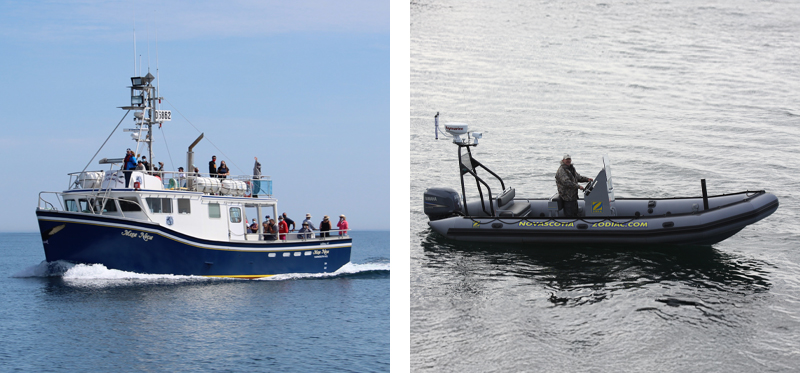
Today, Brier Island Whale and Seabird Cruises continues to offer whale watching tours on the Bay of Fundy. The organisation can currently accommodate groups of up to 50 in its large boat and ten in its Zodiac. As a seasonal business, Lonergan says she’s the only full-time, year-round employee, and they have a team of about 18 in the summer. This year, the organisation will begin operations in mid-June and will finish up around the end of September.
More Flashback Fridays:
Comment policy
Comments are moderated to ensure thoughtful and respectful conversations. First and last names will appear with each submission; anonymous comments and pseudonyms will not be permitted.
By submitting a comment, you accept that Atlantic Business Magazine has the right to reproduce and publish that comment in whole or in part, in any manner it chooses. Publication of a comment does not constitute endorsement of that comment. We reserve the right to close comments at any time.
Cancel