Account Login
Don't have an account? Create One
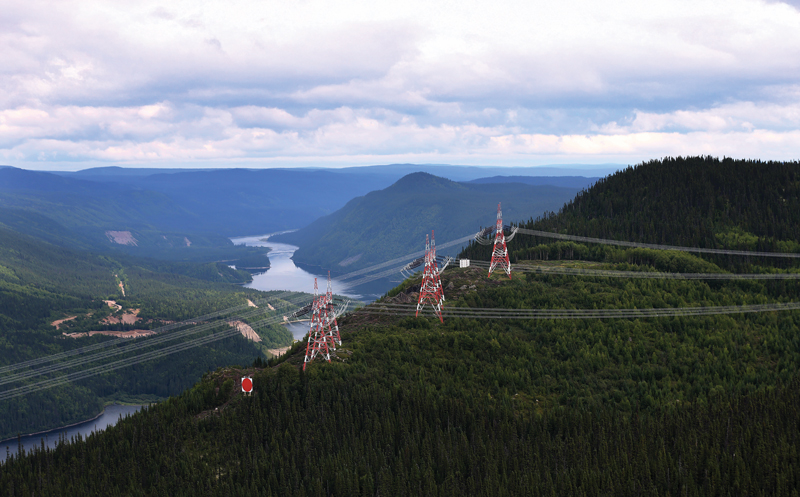
Between provincial elections and public reviews, the only certainty for Churchill River development is more uncertainty. What, when and how are questions that don’t look to be answered any time soon.
As this is written, no one can say with any certainty what further hydroelectric development will happen on the Churchill River in Labrador, or when. That’s not a comment for or against any specific proposals, including those described in the Memorandum of Understanding (MOU) between the provinces of Quebec, Newfoundland and Labrador and their Crown utilities.
Announced with great fanfare, the MOU was revealed to the public at The Rooms museum and provincial archives in St. John’s, N.L. on Dec. 12, 2024. Media and business leaders gathered for the self-described historic moment as government officials and representatives of the Crown utilities spoke about their hope for a trio of proposed power projects. They were supposed to add 3,900 MW of new generation capacity on the Churchill River, along with new terms for the existing Churchill Falls power sales contract between the utilities’ jointly owned Churchill Falls (Labrador) Corporation (a.k.a. CFLCo) and Hydro-Québec. The new generation plan includes upgrades for 550 MW more production capacity at the existing power plant at Churchill Falls, construction of a 1,100 MW facility nearby and another new plant downriver at the location known as Gull Island, offering 2,250 MW more power. The deal, it was claimed, would bring Newfoundland and Labrador’s provincial treasury a jaw-dropping $225 billion in revenue over the life of suggested power purchase agreements. And, of course, desperately needed power for the North American grid.
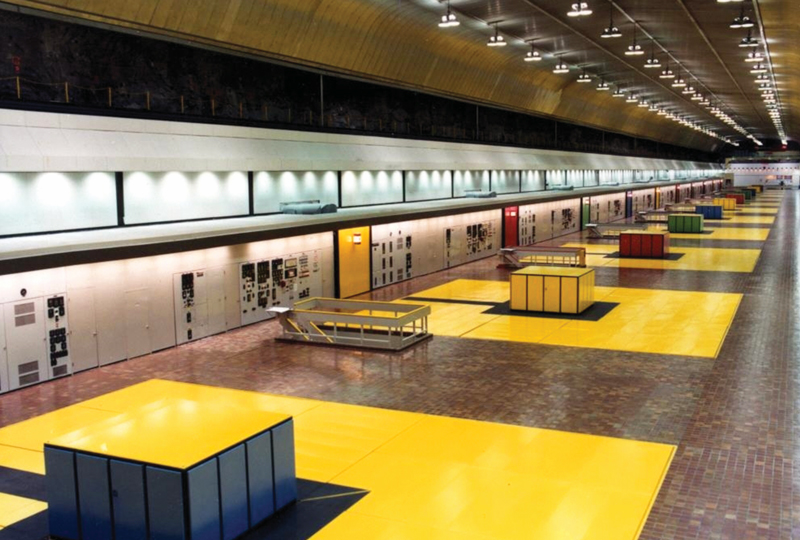
There was little criticism on day one. However, questions were soon being raised by private citizens and Opposition Progressive Conservatives around details like the public revenue estimate, power pricing and availability. Newfoundland and Labrador Hydro did its best to address questions through a substantive public relations effort. Still, criticisms arose and persisted, with many people saying the MOU was ultimately too confusing for them. That was even after a debate held in Newfoundland and Labrador’s House of Assembly in January of last year. There, the 14 Progressive Conservative members ultimately walked out before a vote on a resolution calling for the House to support further negotiations. The motion still passed to continue with talks.
The PCs protested moving ahead with negotiations on the MOU because of a lack of independent review, to assure it was the best deal for the people of the province. It contrasted distinctly with Liberal claims there was “no doubt” the MOU was a good energy deal.
Negotiations to advance the MOU continued from there, with a three-person panel led by consumer advocate Dennis Browne being appointed to review the progress and report back to cabinet. Realistically, because of commercial sensitivities, the panel could offer little to the public. It did, however, note that the goal to have final commercial agreements in place by April 2026 was likely overly ambitious.
… any commentary on development needs to incorporate Labrador’s viewpoint more often, given expectations for more power infrastructure and new power generation for industrial and economic development.
—Julianne Griffin, CEO, Labrador North Chamber of Commerce

In a fall election, the Liberals attempted to make the Churchill River power MOU the central issue for voters, only to see the PCs gain ground instead with their primary messaging on more immediate concerns including healthcare, cost of living and public safety. Along the way, however, the PCs did repeat a commitment to an independent review of the power MOU.
On October 17, the PCs claimed a majority victory in the general election, capturing 21 seats to the Liberals’ 15, with a final two for the NDP. In his election night speech, Premier Tony Wakeham promised: “We will develop Churchill Falls, we will develop Gull island, we will electrify Labrador.”
Today, however, action on the MOU is paused. Premier Tony Wakeham and the Progressive Conservatives announced what they’ve called an independent review of the MOU, to determine if what it sets out is in the best long-term interests of the people of the province. It’s now floating in the ether of the undecided, with everything open for support or condemnation from the appointed review team and ultimately the new government. A final report is due at the end of April.
After the Progressive Conservatives captured a majority in the provincial general election in Newfoundland and Labrador, now-Premier Tony Wakeham announced a review of the Memorandum of Understanding on Churchill River Power. The terms of reference for the MOU review—officially the Inquiry Respecting the Memorandum of Understanding for a Long-Term Energy Purchase Development Initiative Between Newfoundland and Labrador Hydro and Hydro-Québec—are clear.
They state: “the inquiry committee shall determine whether the MOU is in the best long-term interest of the people of the province.”
Currently president and CEO of 5-H Holdings Inc. An engineer and Fellow of the Canadian Academy of Engineering, he was president and CEO of Emera Inc. for 14 years, finishing in 2018 and more recently president and CEO of Algonquin Power and Utilities (2023-2025).
A professor of business, economics and public policy with the Ivey Business School at the University of Western Ontario. He has peer-reviewed publications, with a focus on strategy and policy in Energy and utilities. A director of London Hydro, serving the city of London, Ontario and member of the non-profit Council for Clean and Reliable Energy, he has also had consultancy work in Canada and the U.S.
Served in leadership positions with consulting firm Ernst and Young, including as a managing partner in St. John’s and senior partner in the Toronto office leadership group. His 40-year career involved preparing or reviewing commercial contracts and other agreements related to partnerships, joint ventures and public offerings; capital investments and asset sales. His work has covered risk management and forensic audits.
(Source: Lieutenant-Governor in Council Order on The Inquiry Respecting the Memorandum of Understanding for a New Long-Term Energy Purchase Development Initiative Between Newfoundland and Labrador Hydro and Hydro-Québec, Dec. 15, 2025.)
Atlantic Business requested an interview with Newfoundland and Labrador Hydro CEO Jennifer Williams, to discuss the transition period and challenge of both the MOU review and—per Progressive Conservative commitments to date—a subsequent public referendum. There was no direct response to that interview request.
A statement provided by a member of Hydro’s communications team noted: “Hydro fully supports the Independent Review Committee’s work. As the people’s Crown utility, we have been accessible and responsive to the committee and look forward to continuing that support over the next several months.”
Hydro Quebec has declined comment on the MOU review.
We will develop Churchill Falls, we will develop Gull Island, we will electrify Labrador.
—Premier Tony Wakeham in his election night acceptance speech

“There is still a feeling of anticipation,” said Labrador North Chamber of Commerce CEO Julianne Griffin, speaking with Atlantic Business in January.
She said members of her organization recognize the uncertainty of the moment. At the same time, they believe there will be more to talk about in 2026, even if it’s not exactly per the letter of the existing non-binding agreement that’s under review.
Referencing Churchill Falls, Griffin made specific mention of its tremendous reservoir system and its importance for power system management. She also mentioned the ticking clock on the main Churchill Falls power sales contract and Quebec’s clear desire for certainty in power supply and pricing beyond expiry of the existing contract in 2041.
Griffin also suggested any commentary on development needs to incorporate Labrador’s viewpoint more often, given expectations for more power infrastructure and new power generation for industrial and economic development.
She said there is a sense the MOU review offers a unique chance for something positive for local people and local business. She said it’s a chance for central Labrador in particular to become “more co-ordinated and intentional” in its approach to the provincial governments and utilities, when it comes to maximizing participation in future development on the Churchill River and meeting the needs of communities in proximity to what are arguably some of the region’s most important economic resources.
It was a lesson learned from the previous Muskrat Falls hydro project, she suggested. Businesses weren’t ready for the full effects: from advocating on contract design to the loss of staff to project work. She suggested there could have been a new, centralized training institution established at the time of that project, sanctioned by the province at the end of 2012, as a regional community asset, to help train and upskill people in Labrador for any number of roles.

About a three-hour drive from the Town of Churchill Falls, and much less from the area of Gull Island, the Town of Happy Valley-Goose Bay is considered the heart of central Labrador. Mayor Bert Pomeroy independently spoke with Atlantic Business and echoed comments from Griffin and others on the MOU review and the current moment. “Where it goes, we’re not sure. I think there’s still belief in the community this project will go ahead one way or another, at some point. Whether it’s under the existing MOU, whether it’s a revised MOU, whether it’s a new MOU, I think this project will go ahead,” Pomeroy said.
But experience tells him when things do move, they will move quickly. And it’s not always to the great benefit of the people closest to the development. “From the town’s perspective, we continue to live through the consequences of being sidelined by these major projects,” he said.
In the case of the Muskrat Falls development, Pomeroy noted the provincial-federal Joint Review Panel, working as part of the environmental review for both the Muskrat Falls and expected Gull Island developments, recommended a “capacity agreement” with the town, to help with administrative demands related to the proposed projects.
Pomeroy doesn’t hide the fact he wasn’t happy with the time and effort it took for what did come. In August 2015, more than two years into construction but just ahead of a provincial general election, the provincial government—not the utility—announced an agreement with the town. It offered $250,000 a year for three years.
Pomeroy said it was enough to help establish needed municipal positions, like making the part-time fire chief into a full-time post (the town is considered part of backup emergency response to the projects). The town also used part of the funds for an engineer and a GIS specialist. Pomeroy said the roles are really “vital to operations.” That doesn’t mean the project funds were enough to sustain anything, with the town so far managing to keep the positions in its budget.
…for 40 years we talked and talked and talked and when [Muskrat Falls] came, we weren’t ready. We’ve got another project knocking, at our doorsteps. We’re not ready.
—Bert Pomeroy, Mayor, Town of Happy Valley-Goose Bay

It also doesn’t address infrastructure. Happy Valley-Goose Bay received an extra million dollars in its capital works allocation for 2014-2017 but Pomeroy says it wasn’t enough to cover roads he says were impacted during the Muskrat Falls development, or other needs such as pressures on housing, on mental health and addictions services.
Pomeroy said he’s had a preliminary meeting with the new Progressive Conservative political leadership in Newfoundland and Labrador but hasn’t yet had the chance for substantive discussions. “We’re hoping to get to that point, where we can sit down and talk to the province,” he said.
There is a chance right now, and moving forward, for advance engagement and to solidly establish, for the provincial government in particular, an understanding of how projects could and should connect to and contribute back to people in Labrador. That work is valuable, Pomeroy suggested, even if the exact timing of new developments remains uncertain.
“People talked about Muskrat Falls since the Upper Churchill Project and for 40 years we talked and talked and talked and when it came, we weren’t ready,” he said. “We’ve got another project knocking, at our doorsteps. We’re not ready.”
Both Pomeroy and Griffin did give a nod to the utilities for their responsiveness to date, prior to the MOU review, in participation in local meetings and conferences, plus early prospective supplier sessions.
South in St. John’s, the association representing businesses chasing renewable energy business and electricity project work has also held supplier sessions with Newfoundland and Labrador Hydro and Hydro-Québec, connecting member businesses with potential opportunities.
The entire organization is “still looking forward to those opportunities,” said EnergyNL CEO Charlene Johnson, in a statement. There was no direct criticism of the MOU review.
“We hope this process is completed as quickly as possible so the project, and the opportunities that come with it, can commence as quickly as possible,” she said.
We hope this process is completed as quickly as possible so the project, and the opportunities that come with it, can commence as quickly as possible.
—Charlene Johnson, CEO, EnergyNL

No one at the Innu Nation, meanwhile, was shaken by the announcement of an MOU review. Innu Nation is the political entity representing people of the Mushuau Innu First Nation and Sheshatshiu Innu First Nation.
“That was something that came as no surprise to us,” said Mark Nui, former Grand Chief, an Impact Benefits Agreement negotiator, and senior advisor.
In an exclusive interview, he said Innu Nation was aware of the commitment for the MOU review, as promised by now-premier Tony Wakeham in the Newfoundland and Labrador general election campaign. It was no shock, then, when Wakeham followed through.
Like everyone else, Innu are waiting to see where the provinces go from here. For new developments to proceed, there are legal requirements around First Nations’ consent and expectations. The traditional territory of the Innu people, Nitassinan covers a large part of what is now commonly referred to as Labrador, including the area of Churchill Falls.
There is an existing Impact Benefits Agreement in place covering Gull Island, announced and celebrated back in 2008. It was part of a collection of agreements labeled New Dawn, negotiated by Nui and others, allowing for the Government of Newfoundland and Labrador and its energy corporation to move forward on the Muskrat Falls development, with Gull Island to follow.
Describing the Churchill River MOU as a “spectacle of contempt”, Paul St Pierre Plamondon and the Parti Quebecois claim the Quebec-Labrador border is invalid, arguing that the Churchill Falls power plant is in Quebec.

The Muskrat Falls development ran wildly overbudget; Gull Island was put on a backburner and plans changed. Still, the IBA remains.
When new agreements on new hydro at Churchill Falls and a Quebec-led Gull Island project were announced on Dec. 12, 2024, Innu Nation Grand Chief Simon Pokue was there beside Quebec premier Francois Legault and Newfoundland and Labrador Premier Andrew Furey. He joined Furey based on the signing of an acknowledgement of an MOU that, per a subsequent Government of Newfoundland and Labrador press release, went about “confirming the province’s commitments to the Innu of Labrador.”
Nui said the IBA on the Gull Island Project holds. And Innu Nation financial advisor Eric Coombs echoed the idea, saying the expectation is that commitments in the pre-existing IBA would be assigned to Hydro-Quebec “should they be the developer.”
Separate IBAs are expected but have yet to be negotiated for the expansions suggested in and around Churchill Falls. “We have had preliminary discussions… (we) don’t have an agreement yet but discussions will take place, and I guess it will all depend on the outcome of the referendum in Newfoundland and Labrador,” Nui said.
After 30 years of working to ensure respect for Innu interests, and through many changes in leadership in both provincial governments, Nui isn’t deterred by the previous hold on Gull Island development or the present state of political affairs. He just reiterates there’s been consistency in the position of Innu Nation. What wouldn’t be welcomed is having the Government of Newfoundland and Labrador and new leadership in Quebec announcing something substantive without consultation and confirmation with Innu in advance.

The MOU was negotiated under now-former premier Francois Legault and Quebec is heading for an election later this year. Polls have, at least to now, pointed squarely to the Parti Quebecois (PQ) coming to power.
At the end of 2024, per The Canadian Press, PQ leader Paul St Pierre Plamondon watched the press conference on the announcement of the Churchill River MOU and, at his own press conference, called it a “spectacle of contempt” for a legally valid, commercial agreement. The event was “rather humiliating for Quebec to witness.”
Plamondon was especially critical of the suggested terms for early renegotiation of the Churchill Falls power sales contract. He and the PQ also dispute the idea that any of the Churchill Falls power plant is even within Newfoundland and Labrador, arguing the Quebec-Labrador border is invalid. Plamondon has specifically referred to the 1927 decision of the Judicial Committee of the Privy Council in London, behind the modern border lines, as “nonsensical.”
In Newfoundland and Labrador, Liberal Opposition members warn there isn’t enough time for the MOU review, further negotiations and agreements on power sales and new development, plus a public referendum and signing of a final deal—all before a change in government in Quebec. Really, it’s unlikely.
For all involved, it leaves the question: What comes next?
Similar Articles:
Comment policy
Comments are moderated to ensure thoughtful and respectful conversations. First and last names will appear with each submission; anonymous comments and pseudonyms will not be permitted.
By submitting a comment, you accept that Atlantic Business Magazine has the right to reproduce and publish that comment in whole or in part, in any manner it chooses. Publication of a comment does not constitute endorsement of that comment. We reserve the right to close comments at any time.
Cancel