Account Login
Don't have an account? Create One
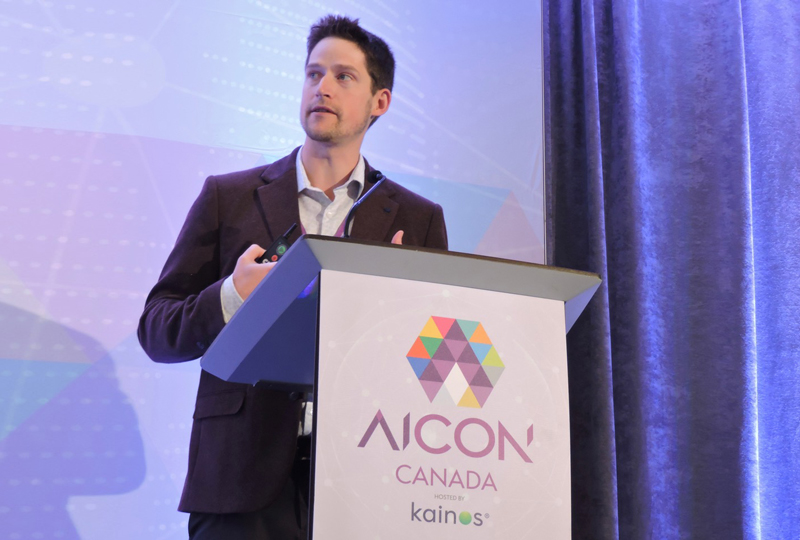
“AI gets rid of a lot of drudgery and administration, so we can focus more on high value tasks,” says Robert Newcombe, founder and CEO of AI-First Consulting. “There is no question AI will change your organization. The question is whether you’re going to design it or watch it happen.”
Newcombe was one of 41 speakers at AICON 2026. For two days in May, over 200 delegates from around the digital world gathered at The Lord Nelson Hotel in Halifax for this third edition of AICON. Previous hosts for AICON have been Belfast and Silicon Valley.
In a way, AICON was a type of outside validation and corporate ‘coming of age’ for Atlantic Canadian tech.
Conference organizer Connla McCann, co-founder and director of Belfast-based Aisling Events, says, “Halifax wasn’t a random choice for us, it was a completely deliberate, strategic move. Atlantic Canada is quietly becoming a powerhouse for tech talent and innovation. Supported by world-class universities and serious applied research, Halifax has a proven track record of delivering much needed infrastructure. It’s also a natural gateway. Halifax offers strong international connections and seamless accessibility, making it an ideal gathering point for a global audience.”
“… We wanted our AI conference to be a more intimate, highly engaged experience where people actually have meaningful conversations, build real connections, and drive actual action.”
—Connla McCann, co-founder and director of Belfast-based Aisling Events,
As to why the event wasn’t held in a city with a larger tech sector or profile, she continues, “There is no shortage of massive tech conferences crowding Ontario. We intentionally chose Halifax to break away from that noise. We wanted our AI conference to be a more intimate, highly engaged experience where people actually have meaningful conversations, build real connections, and drive actual action.”
For a tech conference, AICON was surprisingly human-focused. No one discussed equipment, hardware or software. The only reference to coding was to say it was unnecessary. The presentations were surprisingly understandable and pragmatic.
One of the reoccurring themes was trust. Owen Sagness, CEO of Digital Nova Scotia addressed employee trust. Most AI news mentions job losses. Sagness referenced a World Economic Forum Job Report which says 92 million people will be displaced by 2030, but that 170 million new jobs will also be created. He says 69 per cent of Canadian businesses will see no change in employment numbers. The struggle will be felt more heavily on entry-level positions, while mid-career people will thrive.
Dr. Andrew Forde, a KPMG partner who heads their Technology Strategy and Transformation as well as AI research, believes “AI is the new space race.” He suggested some of the apprehension over AI is around visibility. Old industrial markers were visible: steel, equipment, territory, but new markers are hard to photograph. “Visual infrastructure gets budget; invisible infrastructure gets admired.”
What was really interesting about AICON is that while many speakers had backgrounds with large organizations, the agenda had a day focussed on how small-to-medium sized businesses (with modest budgets) can implement and profit from AI.
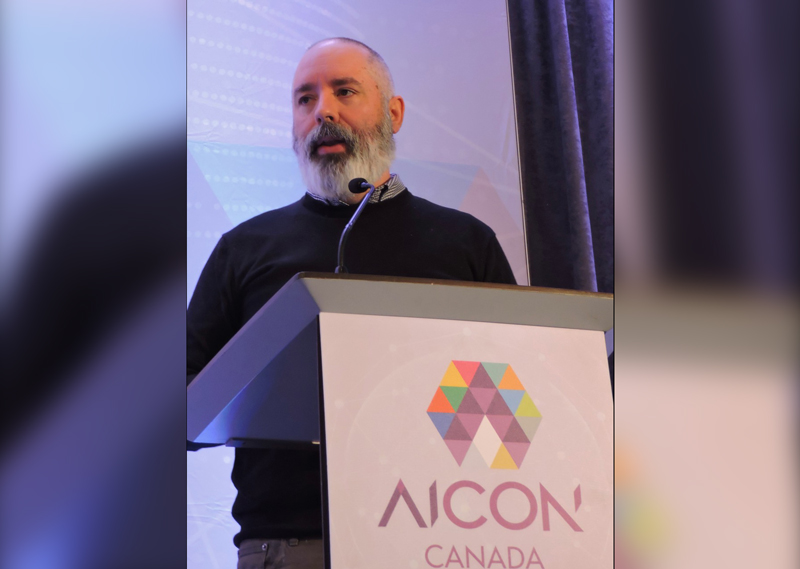
While outside perception may be of client disassociation due to digital tools like AI, Matt Cooper, CEO of Volta innovation hub, finds the opposite. “What this automation, what the technology allows me to do, is spend far more time face-to-face with clients and get to understand their business. For Volta specifically, our relationship with founders in a small business has been much more intimate because this technology frees you to not have the bulk of your energy dedicated to things that used to take weeks and months.”
He adds, “not every business or organization has to adopt these tools to be successful.” That said, he believes AI can speed success and scale. “The key thing is what an individual can do in a small business is 10x what it was a year ago.”
The conference suggests Atlantic Canada’s scale and skillset allows for more nimble adoption of AI into operations.
Similar articles:
Comment policy
Comments are moderated to ensure thoughtful and respectful conversations. First and last names will appear with each submission; anonymous comments and pseudonyms will not be permitted.
By submitting a comment, you accept that Atlantic Business Magazine has the right to reproduce and publish that comment in whole or in part, in any manner it chooses. Publication of a comment does not constitute endorsement of that comment. We reserve the right to close comments at any time.
Cancel