Account Login
Don't have an account? Create One
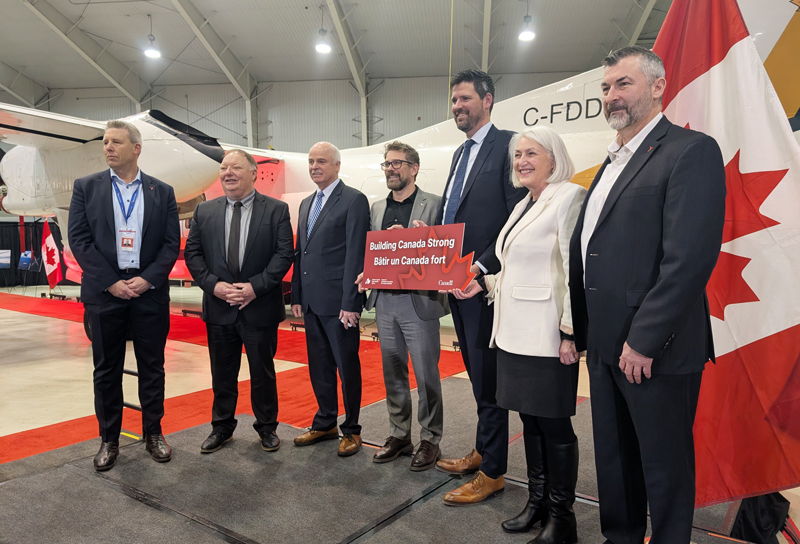
Atlantic Canada Opportunities Agency (ACOA) Minister Sean Fraser has no fear of the provinces in this region not seeing a “fair share” of the federal government’s surging military and defence spending.
Fraser was in St. John’s Thursday, announcing $16 million in repayable loans for five Newfoundland and Labrador-based companies. The funds come under the Regional Defence Investment Initiative (a $379.2 million program nationally, with $38.2 million to be dispersed by ACOA over three years). It’s part of the larger Defence Industrial Strategy announced by Prime Minister Mark Carney.
The federal budget this fall included an attention-grabbing $81.8-billion spending boost planned for over the next five years. That covers everything needed to “rebuild, rearm and reinvest in Canadian Armed Forces members,” per government statements. It includes everything from pay raises for military personnel to new equipment as well as financial support to entice more Canadian companies to the defence industry.
The loans announced this week—to PAL Aerospace Ltd., Virtual Marine Technology Inc., Solace Power Inc., CoLab AI Inc. and Rutter Inc.—are “setting the table,” Fraser said, and “a signal” of what’s to come.
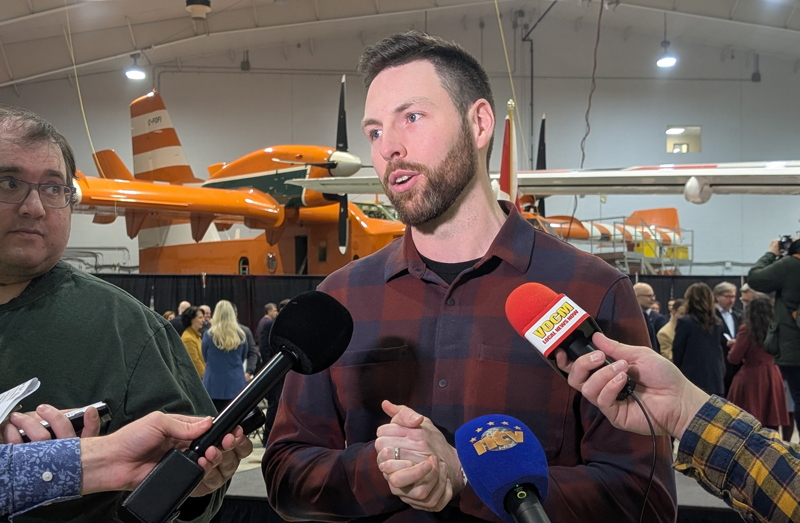
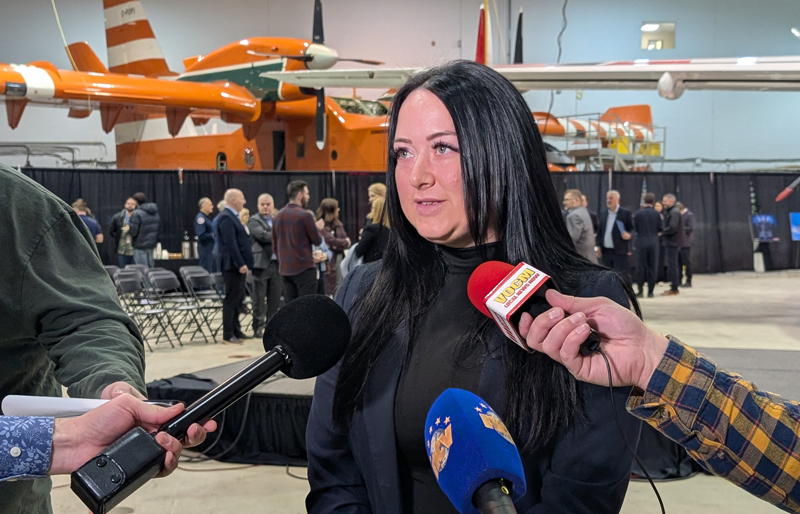
“You should expect to see more of this,” he told the gathering of staff and leadership of the corporations, at a PAL hangar, wherein a plane used by the Department of Fisheries and Oceans for surveillance acted as backdrop and a literal red carpet had been rolled out.
Fraser was asked by Atlantic Business Magazine how he and others in government think a “fair share” of spending for the Atlantic provinces looks like, since the phrase has already been used by more than one premier. Not for the first time, he said it isn’t a pie being divvied up equally by population or any similar, raw measure. The spending is being focused on identified wants and needs and ultimately directed to companies offering solutions.
That said, citing everything from the $200 million dedicated to the multi-user spaceport near Canso through to AI giants emerging in the tech ecosystem in Newfoundland and Labrador, Fraser also said he expects the region will end up landing more than people might initially expect, based on current defence activity, plus the quality of companies here seeing potential military applications for their product or service.
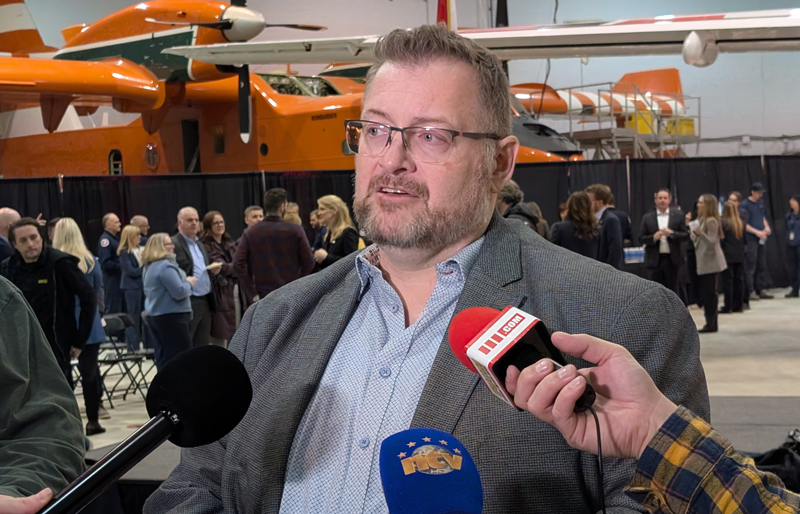
During the press conference, PAL Group of Companies CEO Calvin Ash noted the aerospace company was trusted nearly 40 years ago with intelligence, surveillance and reconnaissance services for the Department of Fisheries and Oceans. “It was rooted in a belief that Canadian industry can deliver world-class aerospace solutions right here at home tailored to Canada’s needs and aligned with Canadian priorities,” he said.
That program evolved. The company began offering related but longer-range services, taking on international missions, eventually extending its contract services to reach to the Dutch Caribbean, Netherlands and United Kingdom.
Ash said the team at PAL were “deeply thankful” to the federal government for past patronage and the new support, in the form of a $7.5-million loan. It will help the company as it works to modify the De Havilland Dash 8-400 for military use. The P-4 multi-mission aircraft also has the potential for a range of operations, including things like search and rescue, environmental monitoring and disaster response.

“Canadian industry is ready, willing and more than able to deliver for the next generation,” Ash told the audience.
After the official announcement, Solace Power CEO Neil Chaulk said the $4-million repayable loan is a help to his company, with its focus on wireless power and data solutions for use in remote and challenging environments. He said it will allow the company to add new capabilities amongst staff and expand its product line. Some things the company makes will be exclusively for the military. However, Chaulk said, as with PAL’s aircraft, there is potential for crossover in purpose and potential. Similar “dual-use” products can service non-defence customers in the long run.
He couldn’t say exactly how many new people the company may need to add to its current staff of 75 in order to meet demands of the company’s development projects. But he does expect to hire. “For us, there’s only one way to go and that’s growing,” he said.
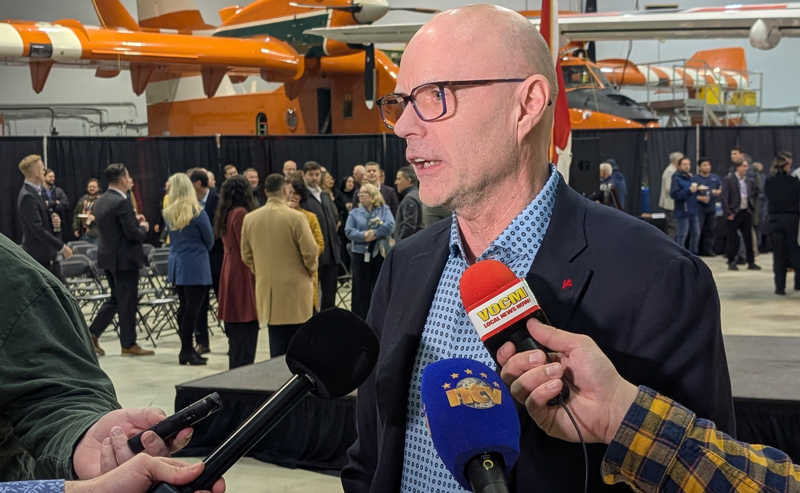
CoLab AI CEO Adam Keating said the $1 million loan to his company will help ensure collaborative software can be built to military needs and specifications. The company, like many others in the local tech sector, was already expanding. CoLab just reached the milestone of 200 employees. Keating said the search for the right people hasn’t hit a wall yet and, thankfully, younger staff are leveling up quickly once they come aboard.
“I think we have our biggest intern batch ever starting in May,” he said.
With around 30 employees, Rutter’s Stephen Hale said there are “lots of companies” in Canada right now able to assist other SMEs in understanding the demands of the defence sector and what the Canadian government and others might need in a supplier.
And when it comes to growth within the company, to staffing, he said the additions being made are not always in specifics like cybersecurity. He said he expects his company will need to recruit in areas like sales and marketing, as it looks at potential new defence sector clients. Rutter will be making use of a $1 million loan to deliver enhanced radar technologies for naval and Arctic defence.
Virtual Marine VP Sales Falon O’Keefe described what lies ahead as “exponential opportunity.” Her company provides highly specific training. With a new, $2.5-million loan through ACOA, the company will be able to develop and deliver small boat training for Canada’s Department of National Defence, as an example, and iceberg management training.
Currently with a staff of 52 people, O’Keefe said Virtual Marine has hired 10-12 people over the last couple of years, mostly with a view to chasing more contracts tied to the government’s expanding defence aims.
Similar articles:
Comment policy
Comments are moderated to ensure thoughtful and respectful conversations. First and last names will appear with each submission; anonymous comments and pseudonyms will not be permitted.
By submitting a comment, you accept that Atlantic Business Magazine has the right to reproduce and publish that comment in whole or in part, in any manner it chooses. Publication of a comment does not constitute endorsement of that comment. We reserve the right to close comments at any time.
Cancel