Account Login
Don't have an account? Create One
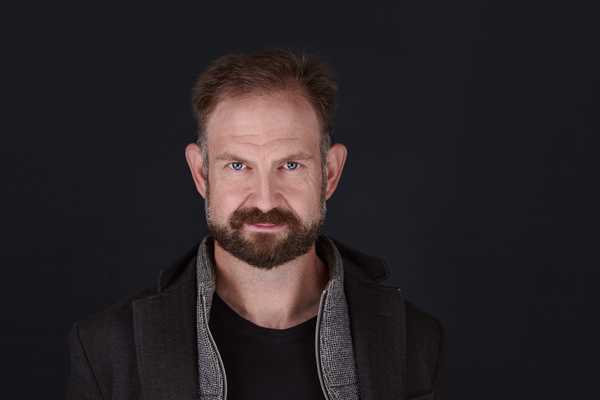
In what is believed to be a world’s first, the University of New Brunswick’s J Herbert Smith Centre has appointed an AI Entrepreneur in Residence to implement and offer an AI Integration for Private & Public Sector Leaders course. According to Kathleen McLaughlin of the university’s media relations department, these “are two regional firsts. While we can’t confirm if they are the first of their kind globally, we are not aware of any similar programs elsewhere.”
She says, “The new position and course were created to support businesses in New Brunswick and across Atlantic Canada in adopting AI. The goal is to help drive economic growth, retain STEM-trained university graduates and strengthen the region’s overall competitiveness.”
To accomplish this, UNB recruited Matt Symes as their AI Entrepreneur in Residence. Symes is also CEO of Symplicity Designs, founding partner of Levership as well as other companies, and a four-time recipient of Atlantic Canada’s Top 50 CEO award.
Atlantic Business conducted a Q&A with Symes about his academic appointment and course goals.
Atlantic Business Magazine: This appears to be a unique academic appointment. Why here, and why you?
Matt Symes: UNB’s J. Herbert Smith Centre exists to translate innovation into real economic outcomes. Atlantic Canada’s owner-operators don’t need demonstrations, they need deployments that move cash flow. At Symplicity, we’ve led 600+ transformations while operating companies myself. That mix—operator discipline plus change mechanics—is what turns AI from hype into throughput.
ABM: What’s the purpose of your appointment, and who is it for?
MS: The purpose is to accelerate AI integration that materially improves productivity, decision quality and working capital. We’ll run executive briefings, hands-on labs, six-week DMAIC sprints inside live organizations, open clinics for small to medium size businesses, and UNB Technology Management and Entrepreneurship micro-credentials. It serves both students and practitioners, with a bias toward leaders who can implement next week.
ABM: Is this building AI or using it?
MS: It’s integration over invention. We assemble proven components—copilots, retrieval, automation, analytics—around existing systems and behaviors. Formats are short intensives, plus field deployments. I both teach and consult.
ABM: What are you offering that others aren’t?
MS: A field-tested operating system that blends workflow redesign, AI building blocks, and management mechanisms [such as] scorecards, governance, change control. We timebox work, tie it to cash, capacity, and quality, and hard-wire gains.
ABM: How is AI different from the usual tech pitch?
MS: Most tech adds tools. AI adds judgment on demand—unmetered intelligence across finance, ops, sales, HR and compliance. Yes, it automates the mundane, but the real edge is speed and quality of thinking at every step: faster analysis, better drafts, earlier anomaly detection, tighter feedback loops.
ABM: Do companies need to replace equipment or software?
MS: No. We wrap legacy with APIs, RPA, and copilots, then upgrade only when ROI is clear. Start with one workflow, one dataset, one key performance indicator. Prove it, then scale.
ABM: Where does it help most—and does it really apply to every industry?
MS: Yes—every business executes common processes: marketing, sales, schedule, delivery, HR processes etc. AI levels up each of those. For marketing, it delivers sharper segmentation, faster content ops, higher testing velocity. In sales, it creates cleaner proposals, proactive follow-ups, shorter cycles, higher win rates. For HR and legal, it leads to better screening, policy drafting, documentation and discovery support at lower cost. And for operations, it delivers standardized work, fewer defects, accelerated throughput, better forecasting.
ABM: Does this matter for one-person shops and solo practises?
MS: Even more. The smaller you are, the more helpful AI becomes. It’s staff augmentation you couldn’t otherwise afford—research assistant, proposal writer, scheduler, QA checker, bookkeeper’s helper, marketer—on tap. While I’m writing these responses, I have an agent helping with two proposals and a follow-up email. It knows my tone, my ambitions, etc.
ABM: Can you quantify impact? Are we talking two to five per cent gain or cut in costs, or something more material?
MS: In targeted workflows, first-wave deployments routinely deliver significantly more. Ninety-three per cent reduction in proposal/RFP writing time for a construction firm; 58 per cent labour-hour savings in the supporting labour function of a professional services firm; 132 per cent increase in inbound leads for a consulting firm.
There are many more examples. Those compounding effects, when scaled across core processes over a year, translate into a 30 per cent annual productivity improvement for early adopters.
ABM: What’s your view on timing—how fast will this transition happen?
MS: AI integration will be as ubiquitous as email and the web—only faster. We are early, which is the good news. The bad news is adoption will accelerate non-linearly and reshape every market. Waiting is a strategy, albeit a costly one.
Similar Articles:
Comment policy
Comments are moderated to ensure thoughtful and respectful conversations. First and last names will appear with each submission; anonymous comments and pseudonyms will not be permitted.
By submitting a comment, you accept that Atlantic Business Magazine has the right to reproduce and publish that comment in whole or in part, in any manner it chooses. Publication of a comment does not constitute endorsement of that comment. We reserve the right to close comments at any time.
Cancel
Mr.Symes ability is no secret to those that know him. New Brunswick is lucky to have the Symes family in residence.